
Grace X.
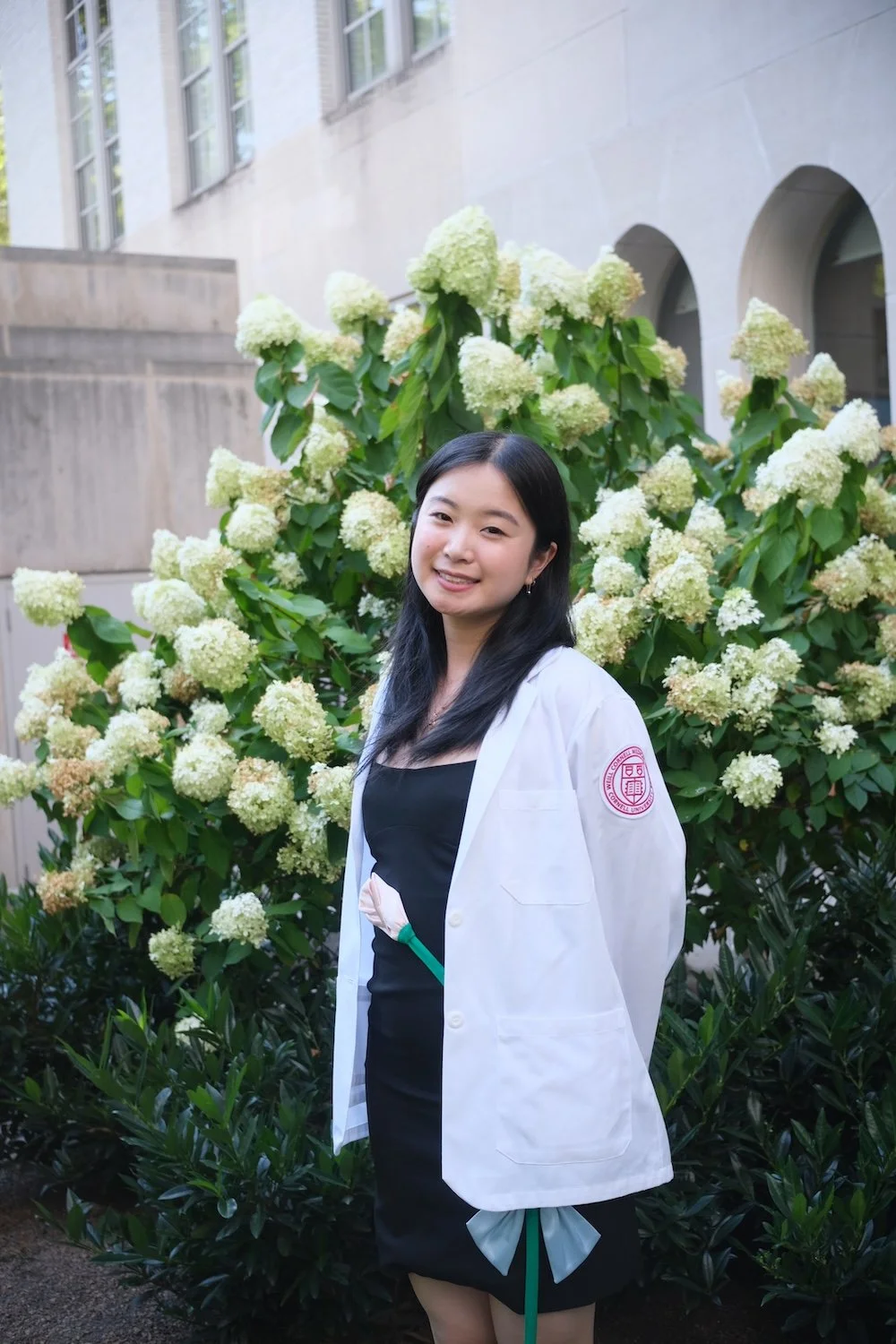
Photo provided by Grace X.
If you’re reading this, you have to start taking care of your mental health.
Ok so, I know that first line might’ve come on strong, but I do know I can’t actually make you do anything... However, for anybody in the healthcare field, especially any of my fellow current medical students, my goal is to use this letter to try to convince YOU to START your mental health journey if you haven’t, and if you have, to continue it!
Why, you might be thinking, is this so important? As medical students, we have so much to do, and not enough time! Also, there’s so much stigma surrounding it, and it can feel really scary and overwhelming.
Statistically, these are the truths of our field. Around 42% to 45% of U.S. physicians report symptoms of burnout, while roughly 29% experience depression and 24% face anxiety according to the AMA and AAMC. However, only about 13% of physicians actively seek professional help to manage burnout and depression. When physicians do seek formal psychiatric care, data indicates a heavy reliance on pharmacotherapy. Around 70% of mental health care plans involve psychiatric medication, whereas referring a clinician to standalone talk therapy is the least utilized approach (Source).
I think this brings up two problems. The first is the fact that mental health is considered taboo. The second is that even if people recognize they need help, it’s scary to seek it out.
First, I want to address the taboo. It IS understandable why we feel its difficulty. This is a famously stressful career path. We feel pressure from the gravity of the lives at stake, from patients coming at their most vulnerable and scared, and unfortunately, from the field internally, our coworkers, our bosses, our mentors, and most strongly sometimes, from ourselves. It seems as if we don’t mention it at all and push through it, we can make those feelings go away and overcome it like we did any exam, application, or evaluation.
But it does exist, and we can’t do that this time.
This is the truth of the matter and the thing I am most passionately trying to communicate in this letter. Mental health is just as important as physical health. Mental health problems are just like any other health problems. Beyond the very scientifically proven connection between stress and autoimmunity, I want to make a more literal point. It is not weak to catch the flu and need to take time away from patient care, because you aren’t strong enough to deliver proper care. The same can be said if you have hit a wall, burnt out, and have nothing left to give. It is OKAY to take a break. To be a good physician, you have to first be good to yourself. Admitting is the beginning of accepting that something isn’t going right and getting yourself the support that you need. It’s as unquestionable and important as going to urgent care or getting cold medicine. Taking care of yourself early is important as well, as we know something small can turn into something much worse if it does not get proper care.
Now, on the topic of getting support. It can be really scary for many reasons, and while I can’t talk about them all, in my opinion, one of the most difficult things to balance is the fact that for a long time, the culture has pushed this "superhero" expectation, and answering questions could feel like a paper trail that could ruin your career.
If you want to use campus resources, Student Wellness Centers are legally required to keep therapy completely separate from your grades and faculty evaluations. For total privacy outside the school system, the Physician Support Line (1-888-409-0141) is an amazing, free resource where you can talk to volunteer psychiatrists completely anonymously, without insurance tracking, no records, and no reports. If you'd rather start online without talking to anyone just yet, the Dr. Lorna Breen Heroes' Foundation offers free, completely anonymous self-screening tools on their website to help you check in on your mental health safely.
Breaking through that initial fear IS worth it, because we know from years of medical data that combining talk therapy with the right medication is effective and will give you the best shot at truly feeling better. Trust me, I know how hard it is to admit you need help when you’re used to just gritting your teeth and pushing through the pressure alone. It’s scary at first, it takes up time, and it can definitely be frustrating, but I truly believe it will make life so much lighter and more manageable. If you’re outcome oriented, it will make you a better student, and a better friend and family member. It will. You deserve that. You deserve to let go of that weight, to work through those fears, and to slowly begin to face yourself and overcome things you never thought you could. It is all possible.
Please, please, please take care of yourself. Mental health care is necessary, lifesaving, life-changing care. You deserve to feel like you matter, you deserve to feel like you can take a break, and you deserve to feel like enough. And lastly, we all want the best for you, but (I learned this the hard way) for anything to change, you have to want it for yourself too. Take care!
Grace Xiang, Second Year Medical Student
Several studies have revealed that medical students, physicians, and healthcare professionals experience mental health symptoms at rates significantly higher than the general population. Stethos[Cope] is a chapter of IfYoureReadingThis designed to help medical students and professionals cope with the unique stressors of medical training and change the narrative of mental health in medicine.
To read more letters and interviews from students, and to learn more about mental health in the medical community, visit the Stethos[Cope] home page.