
Harry Z.
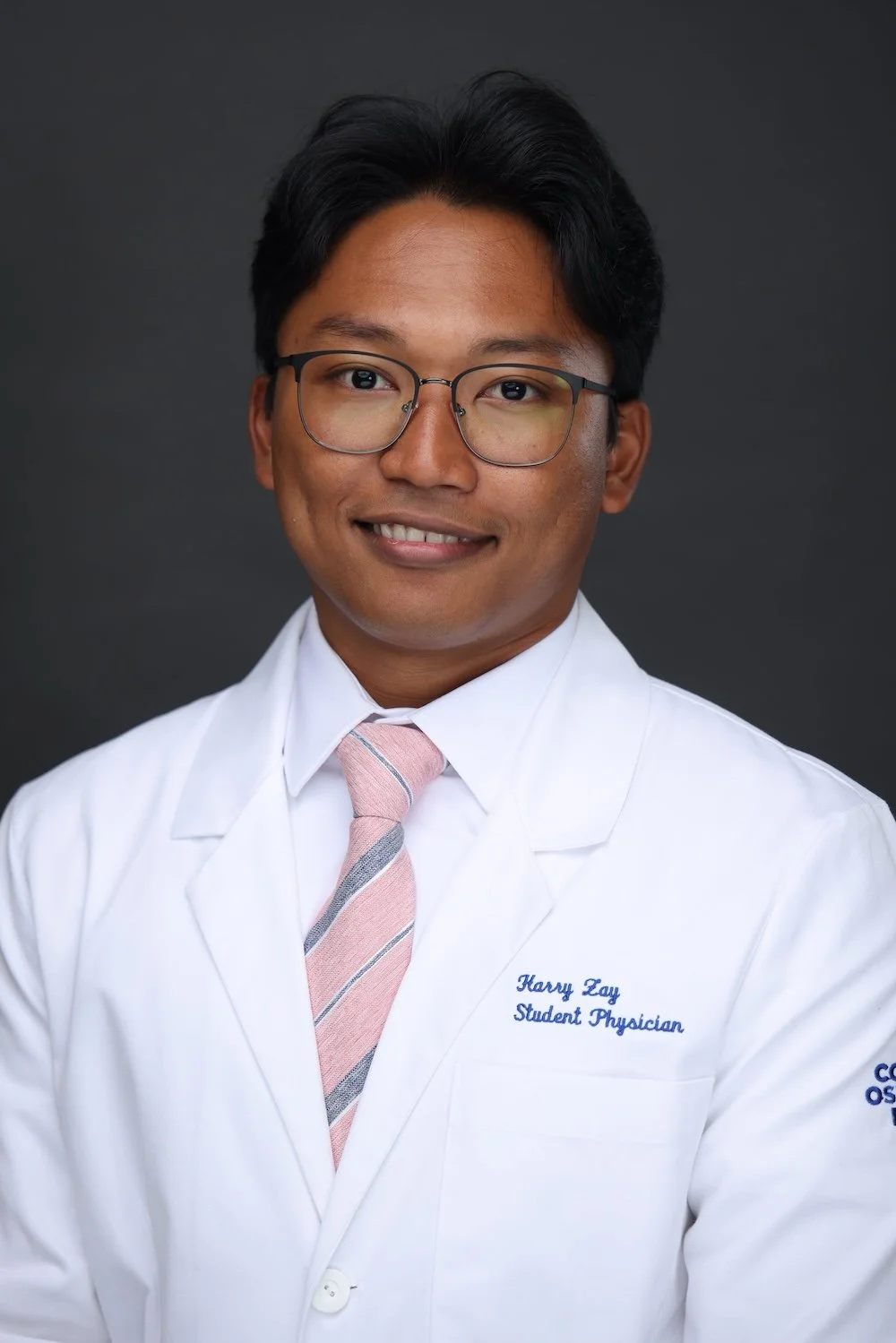
Photo provided by Harry Z.
If you're reading this, you should be proud of how far you've come, still be honest about how hard it has been, and take the next step even if you don't feel completely ready.
Medical education creates a strange mixture of emotions. There are moments when I feel incredibly fortunate to be learning medicine, especially when something finally clicks or when classroom knowledge becomes relevant to a real patient. There are also moments when I feel anxious, exhausted, behind, or unsure of myself. Those feelings do not cancel each other out.
For a long time, I thought coping meant finding the perfect routine, the right study method, enough discipline, and some magical version of balance that would make everything feel manageable. Instead, every stage has challenged that routine in a different way. Unnecessary competition made me compare myself to people who appeared more confident. Board preparation made one result feel larger than everything that came before it. Clinical rotations have made the work more meaningful, but also less predictable. Some days I can study after leaving the hospital; on others, I realize that I forgot to eat lunch.
I have learned that mental wellness is not the absence of difficult days. It is being honest about those days without allowing them to define your ability or your place in medicine. It is recognizing when you need to keep going, when you need to adjust, and when you need another person by your side. I am still learning how to do that. I do not have a perfect formula, but I hope that sharing what has helped me, and what I wish I had understood earlier, might make someone else feel a little less alone.
Harry Z., Third Year Medical Student
Q: How do/did you manage the stress of preclinical training, such as learning high volumes of detailed information and increased levels of competition?
A: I don’t think I ever found a way to make preclinical training easy. What changed was recognizing how much of the pressure came from the curriculum and how much I added through comparison. Medical students talk about studying constantly. Someone has completed more questions, reviewed more cards, or discovered a resource that will supposedly change everything. It’s easy to turn those conversations into evidence that you’re behind, even though another person’s confidence rarely reflects what they’re experiencing privately. What helped was treating other students’ routines as possibilities rather than instructions. I chose a small number of resources, gave my approach time to work, and made changes based on my own results. Having a process gave me a place to return to when the surrounding noise became overwhelming.
Learning with other students also made the experience less isolating, but that didn’t mean we needed to spend every hour locked in a study room together. Much of my productive studying happened alone. What mattered was knowing we could ask questions, share perspectives, or talk through difficult concepts when it was helpful. We could support one another without needing identical routines. Connecting the material to patient care also helped.
Preclinical education can reduce medicine to lectures, pathways, and board questions. Working with patients reminded me that the purpose wasn’t to become exceptionally good at exams; it was to become capable of caring for someone. Studying for COMLEX Level 1 brought a different kind of stress. I had to accept the maturity of preparing for a pass/fail exam with the goal of passing rather than expecting myself to master every practice set. Some days were productive; others were draining. Consistency mattered, but sometimes taking a break was what allowed me to return the next day and continue. I never eliminated the stress. I became better at separating the pressure of learning medicine from the pressure I added through comparison, perfectionism, and the belief that struggling meant I wasn’t capable.
Q: What advice do you have for first- and second-year medical students regarding mental wellness?
A: I would tell them not to wait until they’re completely overwhelmed before deciding that their mental health deserves attention. You don’t need to reach a breaking point before being honest about how you’re doing. Medical school makes it easy to confuse merely functioning with being okay. You can attend lectures, pass exams, answer questions, and fulfill your responsibilities while still feeling anxious, isolated, or exhausted. Looking productive from the outside doesn’t always reflect what’s happening internally.
For me, support often looked very ordinary. While my fiancée, Danielle, was in law school, we studied together over FaceTime and had dinners when we intentionally stopped discussing school. During dedicated, we played Fortnite with friends almost every night! It gave us a place to laugh, complain, and keep each other updated. Our pet, Bumi, also reminds me that I have responsibilities outside medicine. He remains unconcerned with board examinations and firmly committed to his own priorities.
I also wish I had understood that mental wellness doesn’t need to resemble the polished version presented on social media. It may not include a perfect sleep schedule, daily exercise, meal preparation, meditation, and eight productive hours of studying. Sometimes it’s eating dinner with someone you love, doing something that has nothing to do with medicine, or admitting that your current routine isn’t working. There will always be more material available. If finishing everything becomes the requirement for allowing yourself to rest, you may never feel that you’ve earned it. Protecting some part of your life from school isn’t laziness; it gives you somewhere to return when medicine begins to feel like your entire identity.
Every student’s version of wellness will look a little different. For me, it depended less on creating a perfect routine and more on staying connected to the people and ordinary parts of life that made me feel like myself. I hope other students give themselves the same permission to discover what keeps them grounded.
Q: What’s the best advice you’ve ever received for maintaining your mental health?
A: Trust your process and trust your preparation. I know that can sound like something printed on a motivational mug. During dedicated to COMLEX Level 1, I didn’t always find it easy to believe. Every disappointing practice score made me question whether I had done enough, and I kept waiting for the point when I would finally feel completely ready. That feeling never really arrived.
What I gradually learned was that feeling anxious didn’t necessarily mean I was unprepared. Sometimes it simply meant that the outcome mattered deeply to me. My emotions were real, but they weren’t always an accurate measurement of the work I had completed or what I was capable of doing. Trusting my preparation meant looking at the larger pattern rather than letting one difficult day or practice set rewrite the entire story. It meant returning to the plan, making thoughtful adjustments when necessary, and remembering that doubt didn’t erase the progress I had already made. Not every anxious thought needed to be treated as an evaluation of my ability.
When my Level 1 report finally showed “PASS,” I was already in my first week of my internal medicine rotation. I had spent weeks waiting for that result, but by the time it arrived, the next stage had already begun. I felt underwhelmed yet relieved, but I also felt more like a third-year student than someone still trying to finish second year. That moment taught me that medical education rarely pauses long enough for us to feel completely finished or ready. Often, we have to move forward while some uncertainty comes with us.
Trusting the process doesn’t mean assuming everything will be easy or that it will work out exactly as planned. For me, it means letting the work I’ve done speak as loudly as the fear that tells me it wasn’t enough. I may not always feel confident, but I can still recognize that I’ve prepared, grown, and earned the right to take the next step.
If you’re waiting to feel completely ready, remember that you may already be more prepared than your anxiety allows you to see. Take the next step anyway. Sometimes confidence doesn’t arrive before you begin; it catches up with you along the way.
Several studies have revealed that medical students, physicians, and healthcare professionals experience mental health symptoms at rates significantly higher than the general population. Stethos[Cope] is a chapter of IfYoureReadingThis designed to help medical students and professionals cope with the unique stressors of medical training and change the narrative of mental health in medicine.
To read more letters and interviews from students, and to learn more about mental health in the medical community, visit the Stethos[Cope] home page.