
Gabby M.
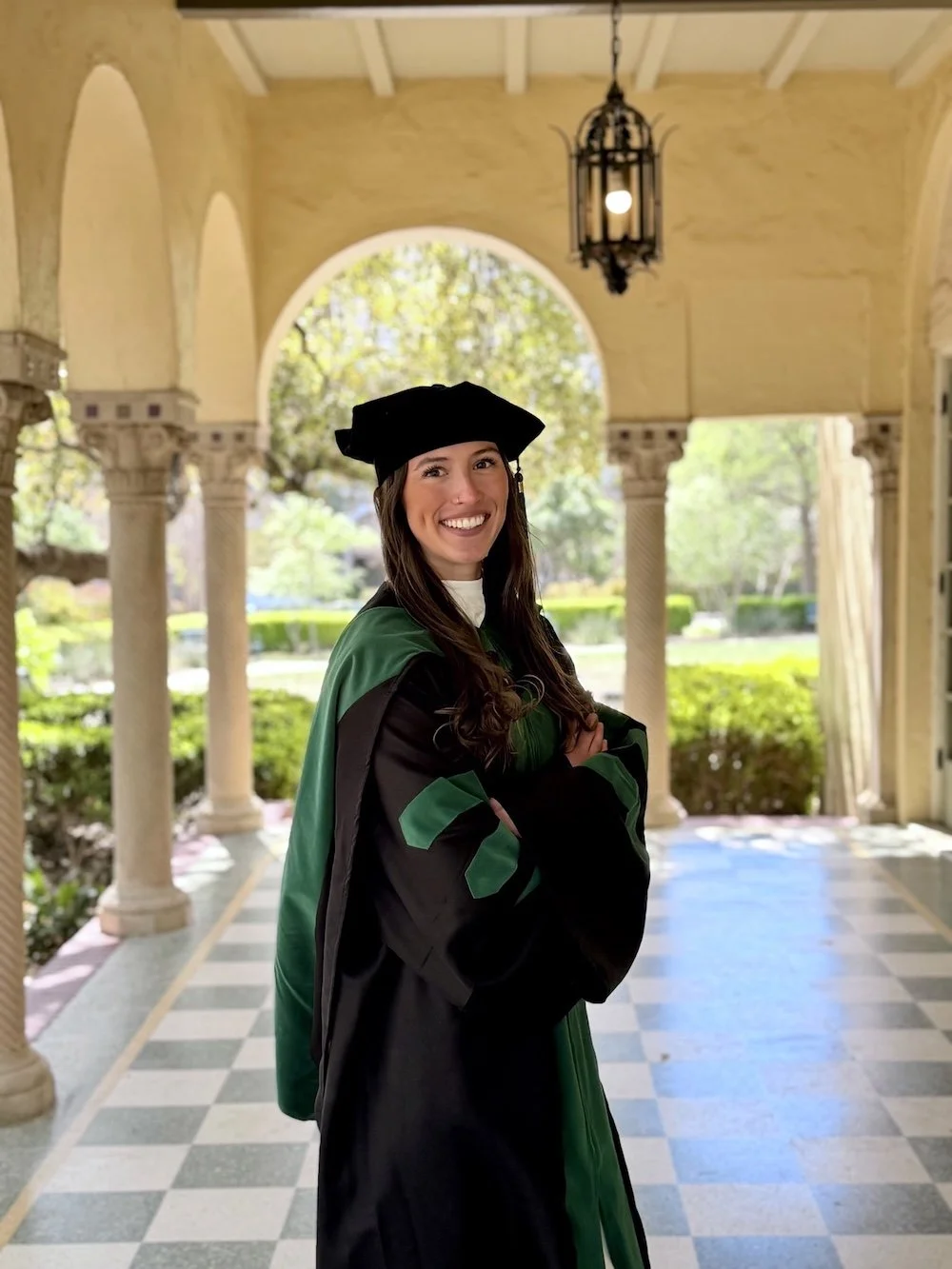
Photo provided by Gabby M.
If you’re reading this, don’t be afraid to go against the grain.
Hello, my name is Gabby! I am a fourth-year medical student and just recently matched into PM&R. Throughout medical school, I definitely struggled with trying to stay true to who I was but also doing the things that I needed to do to be successful. When you first start out, I think you doubt and second-guess a lot of what you are doing, even if it has been rooted into your life for years. I found myself constantly conflicted in what I knew what was best for myself and looking at what my classmates were doing. For example, in my first year of medical school I tried to take most weekends off of studying because me and my husband were living apart and doing long distance. I would grind really hard during the week in order to just do my ANKI over the weekend and would spend most of my time with my husband. This was not the norm, especially the weekend before an exam, and I think most of my classmates would look at me in shock when I would tell them what I was planning on doing. I constantly felt guilty that I was not spending the entire weekend grinding away, but I knew I needed that time to continue a healthy marriage and give my husband the respect he deserved. Full disclosure, my medical school is pass/fail, therefore once I felt like I could pass an exam and knew enough to be a good doctor, I would be totally okay with taking it down a gear until our next exam. I know this is not the case at all medical schools. Looking back, I’m so happy I did this. Preclinical grades seem so large at the moment, and they are, but taking that time for people that were important to me helped keep me grounded during all four years.
I worked out all throughout medical school, 3 to 4 times a week at minimum because I knew I needed it for my mental and physical health. I would feel better, study better, and keep my mood high, but unfortunately in medicine this is not a norm. I think as physicians and medical students we tend to put our own health on the back burner due to constraints and pressures put upon us, and that was something that I did not want to sacrifice. I felt judgement at times because I wasn’t dedicating all my time to medicine, which I understand where it comes from, but don’t agree. It really is tough to watch a lot of health professionals not take health advice themselves, and truly neglect their wellbeing. Don’t be afraid to make this a priority. It’s important for your longevity. This process is a marathon, not a sprint. You have an entire career ahead of you and you need to be able to make it to the end of that career. It is a long road, and you want to enjoy as much of that road as you can, including feeling your best self. Let’s be totally real, this comes with sacrifices, I wasn’t the top of my class, I didn’t do any groundbreaking research, I wasn’t trying to match at the top program in the country. I sacrificed parts of medical school in order to continue my favorite things such as working out, spending time with loved ones including weddings, baby showers, and all the things. I truly embraced being myself during medical school and I think it was totally worth it.
To whoever is reading this, especially if you are about to start medical school or are in the thick of it, please don’t lose yourself in this crazy journey that we are all on, I promise that it will pay off in the end. Even if going against the grain with whatever that looks like for you is uncomfortable in the moment, know you are not alone.
With love,
Gabby M., Fourth Year Medical Student
Q: Have you ever sought professional help or counseling for mental health support during your time in medical school?
A: YES – absolutely! During the back end of my third year of medical school I was in a really dark place. I knew I needed to make some changes and process some of the challenges I went through that year. I found my current therapist and could not be happier with that decision. She is an absolute gem and I saw my perspective on medicine changing by having someone help me process and also validate many of my feelings. I recommend everyone to try therapy if you haven’t – especially during third year and into residency!
Q: What is your most used coping strategy or technique?
A: As simple as this is, I learned to just let go of control of many situations. I think third year was tough because we were harshly graded (expected to be at the level of an intern in order to receive honors) and it was very subjective. Once I realized no matter how hard I worked it didn’t always give me the same result, I just had to be okay with that. I turned my focus into making myself the best doctor I could be instead of focusing on my grades which I did not have full control over, but also putting all my effort into what I could control. This changed my third year and beyond!! As hard as it is to do, it creates so much freedom.
Several studies have revealed that medical students, physicians, and healthcare professionals experience mental health symptoms at rates significantly higher than the general population. Stethos[Cope] is a chapter of IfYoureReadingThis designed to help medical students and professionals cope with the unique stressors of medical training and change the narrative of mental health in medicine.
To read more letters and interviews from students, and to learn more about mental health in the medical community, visit the Stethos[Cope] home page.