
Riya P.
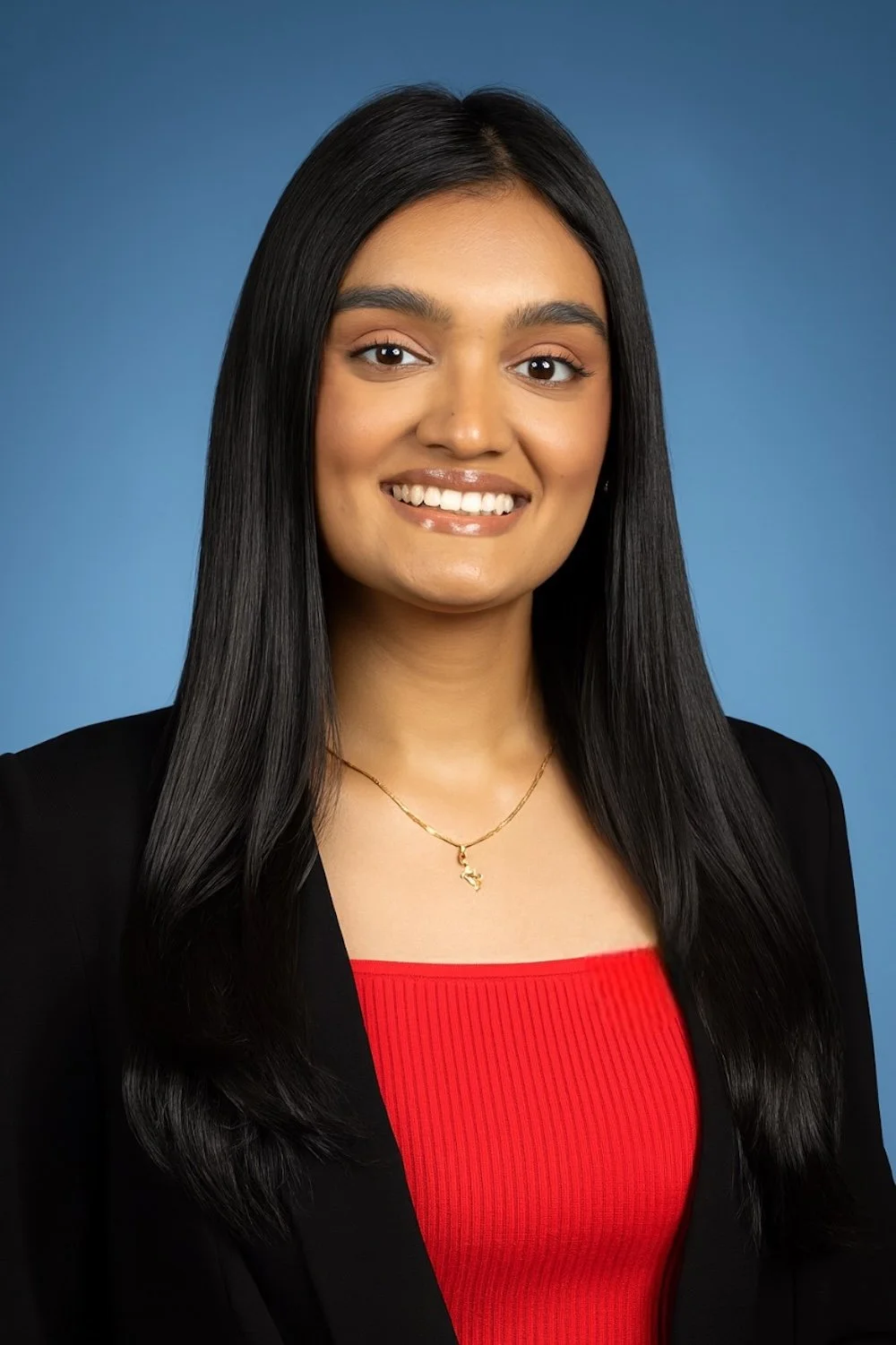
Photo provided by Riya P.
If you’re reading this, there are lives quietly intertwined with yours—threads you’ve woven into others without ever knowing, and threads that have gently shaped you in return.
“Sigo adelante queriendo luchar para ser una persona bien.”
“I keep wanting to fight to be a good person.”
These words came from a letter written to me by Carolina, a young girl in a Honduran orphanage whose education my family had the privilege of sponsoring—someone I have never met yet somehow have come to know. Our lives have never physically crossed, yet through letters written in Spanish, we’ve shared pieces of who we are. And in her words, there was something powerful—not just resilience, but intention. A quiet decision to keep going, to keep becoming.
It made me realize something simple: the people who shape us are not always the ones closest to us, and the impact we leave is not always something we get to witness.
In fourth grade, I had a pen pal named Ms. Gloria. She was 90 years old, living in a nursing home. We wrote letters, drew pictures, shared pieces of our days. At the time, it felt small. But looking back, it was something more—two lives, decades apart, choosing to connect. I don’t know what those moments meant to her, but I know they taught me to see people beyond their circumstances—to recognize the quiet strength present at every stage of life.
During COVID, through Zoom, I taught children in India basic first aid and CPR using stuffed animals, speaking in Hindi, trying to make something unfamiliar feel approachable. It wasn’t perfect, but it didn’t need to be. What mattered was the connection—the shared effort to learn, to try, to show up for one another across distance.
In smaller ways, too—through tutoring, through conversations, through simply being present—I began to notice something: no interaction is ever truly insignificant.
A moment of patience.
A word of encouragement.
Even something as simple as a “hi.”
These are not small things.
They are the moments that can shift someone’s day, sometimes without you ever knowing it.
And they are also the moments that shape you.
I learned that early on—not just from these experiences, but from the people closest to me. Growing up in a home filled with family, with grandparents on both sides present, with parents who showed up every day, I learned that care is not grand—it is consistent. And from my younger brother, at just three years old navigating a speech delay, I saw what perseverance looks like in its purest form: trying again and again without questioning whether you’re capable—just believing that you will get there.
When you begin to truly see people—to look for their strength, even when it isn’t obvious—you change.
You become softer, but not weaker.
More present, more aware, more human.
And this is what draws me to medicine.
Because medicine, at its core, is not just about diagnosing or treating—it is about seeing. Seeing the person behind the symptoms. The child behind the diagnosis. The family behind the fear.
In pediatrics, and especially in pediatric oncology, I know I will encounter strength in its most unexpected forms. Children who carry more resilience than their size should allow. Families who continue to hope even when the path is uncertain. Moments where healing is not always about curing, but about being there—fully, honestly, compassionately.
And in those spaces, the smallest things matter.
A smile.
A few extra minutes.
A tone of voice that says, “I see you.”
Because just like in life, you may never fully see the impact you have on your patients.
But it is there.
In the way they remember how you made them feel.
In the way a child feels a little less afraid.
In the way a family feels a little less alone.
So if you’re reading this, remember this:
You are constantly shaping and being shaped.
Nothing is too small to matter—not a word, not a gesture, not a moment.
So say the “hi.”
Offer kindness.
Choose to see the strength in the person in front of you.
Because in medicine, and in life, it is often the smallest connections that carry the greatest weight.
And sometimes, all it takes is one moment—one interaction—to remind someone that they are not alone.
Riya P., Second Year Medical Student
Several studies have revealed that medical students, physicians, and healthcare professionals experience mental health symptoms at rates significantly higher than the general population. Stethos[Cope] is a chapter of IfYoureReadingThis designed to help medical students and professionals cope with the unique stressors of medical training and change the narrative of mental health in medicine.
To read more letters and interviews from students, and to learn more about mental health in the medical community, visit the Stethos[Cope] home page.