
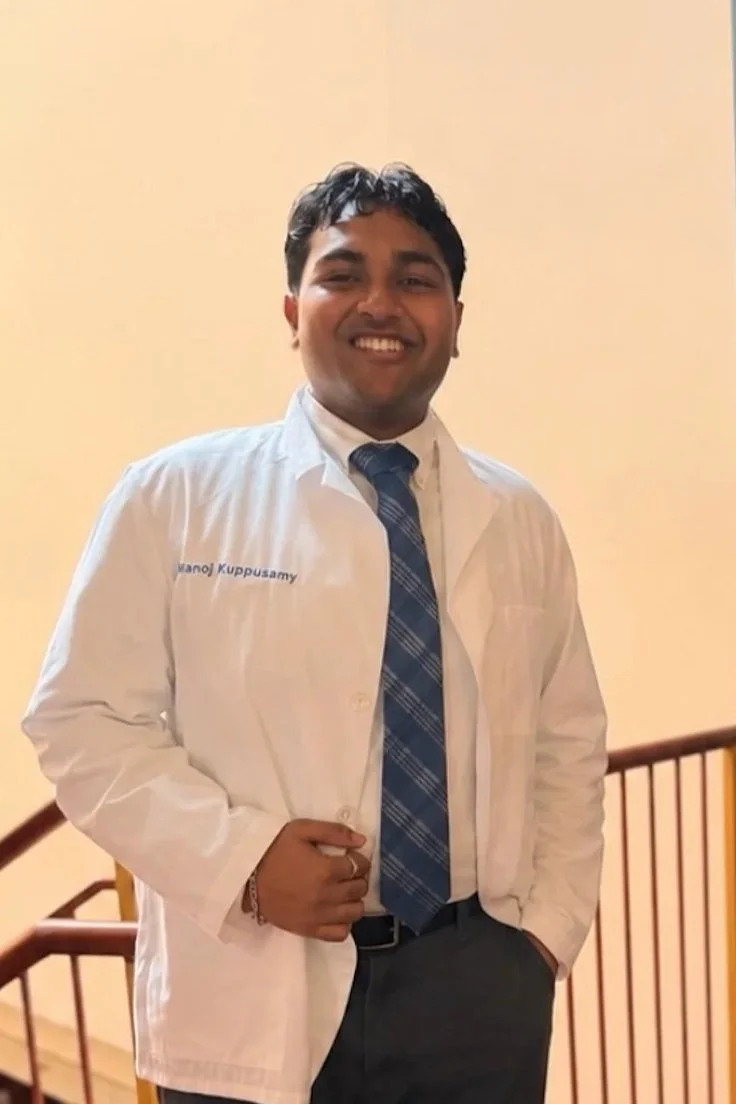
Photo provided by Manoj K.
If you’re reading this, take a moment to appreciate how far you have come.
I remember the nights in undergrad, before a big exam when I would be tossing and turning in bed, planning out an alternative career path in case my exam did not pan out the way I hoped it did. I remember how whenever I would meet a medical student, I would look at them and their achievements in awe, envisioning myself in their shoes one day. I remember thinking, minutes after I submitted my application to medical school, that I would do anything to be admitted. At that moment, all I wanted in life was to be accepted, and I convinced myself that if that were to occur, I would finally feel like I had done enough.
And then, I got accepted to medical school and forgot all about those moments.
Many people, no matter the career path, have the tendency to push off a sense of accomplishment to the last possible second. There’s many terms for this phenomena, “moving the goalposts”, the “arrival fallacy”, the “hedonic treadmill”. Despite the name, I’m sure many of you reading this now have experienced the same pattern. Accomplishments that were so important before we accomplished them suddenly wane in the sight of the constant rising challenge. In medical school especially, it can feel like we do not even have the times to celebrate our wins, big or small. Constant exams, practicals, lectures, workshops, and meetings line our schedules leaving any time for reflection to the wayside.
But perhaps that is exactly why we need to make time for it. I think about how strange it is that I live a life now that I once desperately wished for, yet I barely stop to appreciate it. The medical students I once looked at with such admiration are now my classmates, and the opportunities I dreamed about have now become my daily routine. Somewhere along the way, what I once considered a dream became something I took for granted.
I don’t think there’s anything wrong with ambition. In fact, I think that desire to accomplish more is what brought us all here to the first place, and will be the fire that drives us to even greater heights. But I wonder how much of our lives we spend looking forward to the next milestone, convincing ourselves that our satisfaction lies just beyond it, instead of recognizing how far we have come already.
The most important thing that medicine has taught me is that life is short, and unpredictable. Pushing happiness to the side in order to focus harder on the next challenge seems like a good idea, until you find yourself looking back at a life spent chasing happiness rather than experiencing it.
Every once in a while, I think it’s worth taking a moment to look back. To remember the things we once wished for, the obstacles we questioned if we’d be able to overcome, and the person we were before we accomplished the things that seem so ordinary now.
I think about my undergraduate self lying awake at night, wondering if he would ever make it to medical school. I wonder what he would think if he could see me now. And while I know there are countless challenges still ahead of me, I’d like to think he’d be proud of how far we’ve come. So, maybe I should be too.
Manoj K., First Year Medical Student
Several studies have revealed that medical students, physicians, and healthcare professionals experience mental health symptoms at rates significantly higher than the general population. Stethos[Cope] is a chapter of IfYoureReadingThis designed to help medical students and professionals cope with the unique stressors of medical training and change the narrative of mental health in medicine.
To read more letters and interviews from students, and to learn more about mental health in the medical community, visit the Stethos[Cope] home page.