
Leela S.
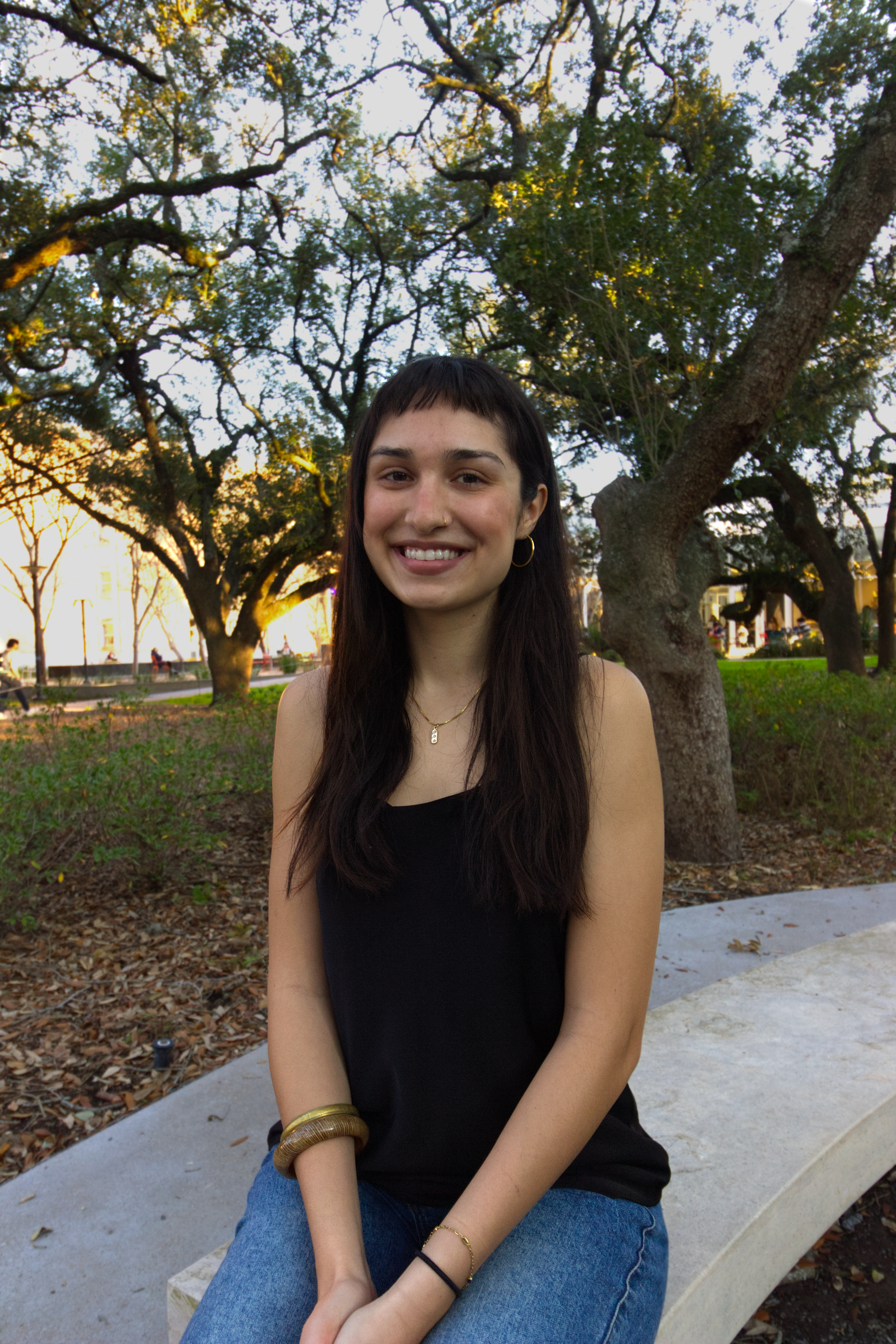
Photography by Isa C.
If you're reading this, forgive yourself for not meeting unattainable standards.
I made it to my senior year of college having learned a couple of surprising lessons. Number one, not everything is black and white. Number two, some of the behaviors that benefit me externally are actually detrimental to my mental health. Sometimes, instead of bending to the world’s expectations, I need to create my own.
I had experience with mental health resources before college, but I wasn’t on my own. I had my mom to advocate for me and support me while I was struggling through elementary school, then middle school, then high school.
While I was ruminating, entertaining my obsessive thoughts, and engaging in elaborate rituals every day, I had a support system to ground me. My self-hating thoughts kept me up until 2 am, while my rituals woke me up at 6 am. I was isolating myself and burying myself in schoolwork for academic validation. Medication and therapy made college and independent living possible for me.
But as my OCD symptoms improved, my executive function dropped drastically. My extreme organizational skills and my self-accountability fell away as I began struggling with simple tasks and situations. Everything was overwhelming, and nobody’s words or actions could be enough to reassure me that things would change for the better.
My freshman year of college, I was diagnosed with autism spectrum disorder. Although I thought I did, I had no idea what this would mean for me. I went through cycles of grief and constant research. How could I make my life easier? I was in a rocky relationship, struggled with trust and balance with friendships, had a family that was struggling at home, and could barely make it to class. I was hitting rock bottom every week and breaking under the smallest pressure.
I was holding myself to the standards of my neurotypical peers. I had to be extremely social, extremely busy, and above all, perfect. It was freeing to let that go. I remember the first time I opened up about feeling left out. I remember the first time I dropped a commitment to preserve my well-being. I remember the first time I opened up about my struggles to another autistic person at Rice. I remember when I decided to let art back into my life. I remember when I realized that sometimes crying is what helps me get through the day. I took time to learn my limits, my boundaries, and what brings me joy, and it’s made me a better friend, partner, and person.
So, if you’re reading this, listen to your mind and body. And start chasing your own best self: even if that looks different than what you thought it would.
Leela S., Rice University
Connect With Us
To follow IfYoureReadingThis at Rice on Instagram, get in touch with our chapter, and learn about more resources available to Rice students, visit our chapter’s homepage.
