
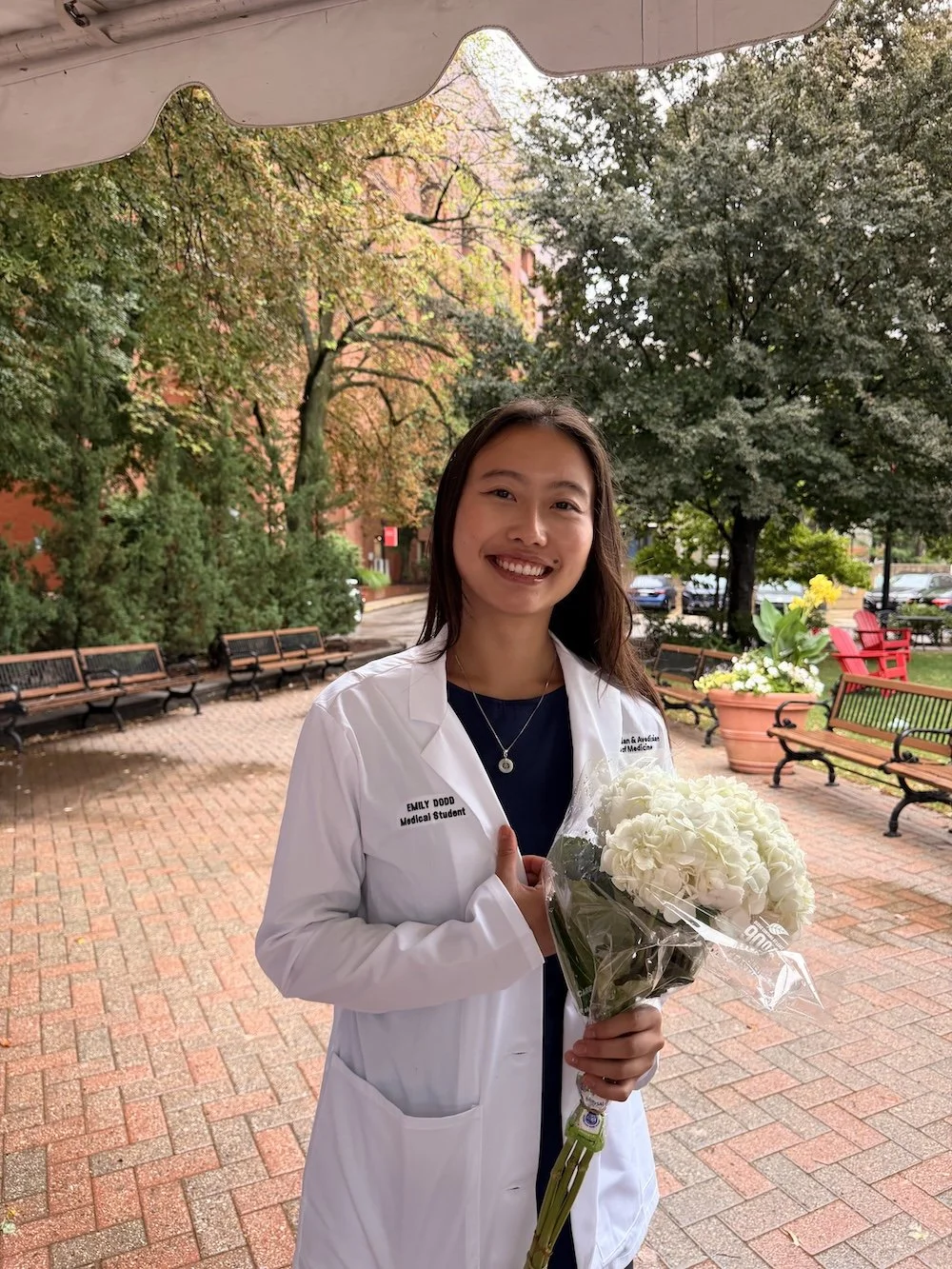
Photo provided by Emily D.
If you’re reading this, you are reading a medical student's half-formed thoughts about survivorship and what it means to be a friend.
I know the Cornell 7 has been on people's minds. I am not going to pretend like it is not both visibly and invisibly affecting those around me. The news and outrage about the Cornell 7, which is truthfully more than 7 people, is forcing people to confront their own memories and experiences. For some, it reaches back to childhood memories; for others, college and beyond. Whether it happened to them, or a friend, or a family member, these emotions deserve recognition, and more so, the people that this happened to deserve non-judgemental support.
In recognizing this, I wanted to share some thoughts about how to support the people you love who disclose information about sexual assault. The advice is simple, but as a previous helpline worker, you would be surprised by how often we, as a collective public, can forget.
1. Listen to what they share. Don't jump to "fix" the problem (there is not always a clear solution). Sit with them in their pain and give them the space to make decisions for themselves. Someone once told me that sexual assault comes with a huge loss of autonomy. Afterwards, people have to rebuild that autonomy, and other people making decisions for the person that was assaulted gets in the way of that process .
2. Don't suggest or force a person to reconnect with the person that assaulted them. Sometimes, people can think it is a misunderstanding that can be cleared up by a resolution or conversation between those involved like any other misunderstanding. But sexual assault is not necessarily like that. No one is obligated to reach back out to the person that hurt them.
3. Don't put the labels on something for someone. A lot of people will share bad experiences and never connect them to big words like "sexual assault", "physical abuse", or "neglect". As a friend, it is not your job to tell another person what did or did not happen to them. This is a journey someone figures for themselves.
These are just a few thoughts, but I hope it could be helpful for some. Sending constant reminders that no matter what your role is - an undergraduate student, graduate student, or faculty - you deserve to work and study without the threat of sexual assault. You deserve an academic institution that is willing to protect you.
Emily D., First Year Medical Student
Several studies have revealed that medical students, physicians, and healthcare professionals experience mental health symptoms at rates significantly higher than the general population. Stethos[Cope] is a chapter of IfYoureReadingThis designed to help medical students and professionals cope with the unique stressors of medical training and change the narrative of mental health in medicine.
To read more letters and interviews from students, and to learn more about mental health in the medical community, visit the Stethos[Cope] home page.