
Arushi M.
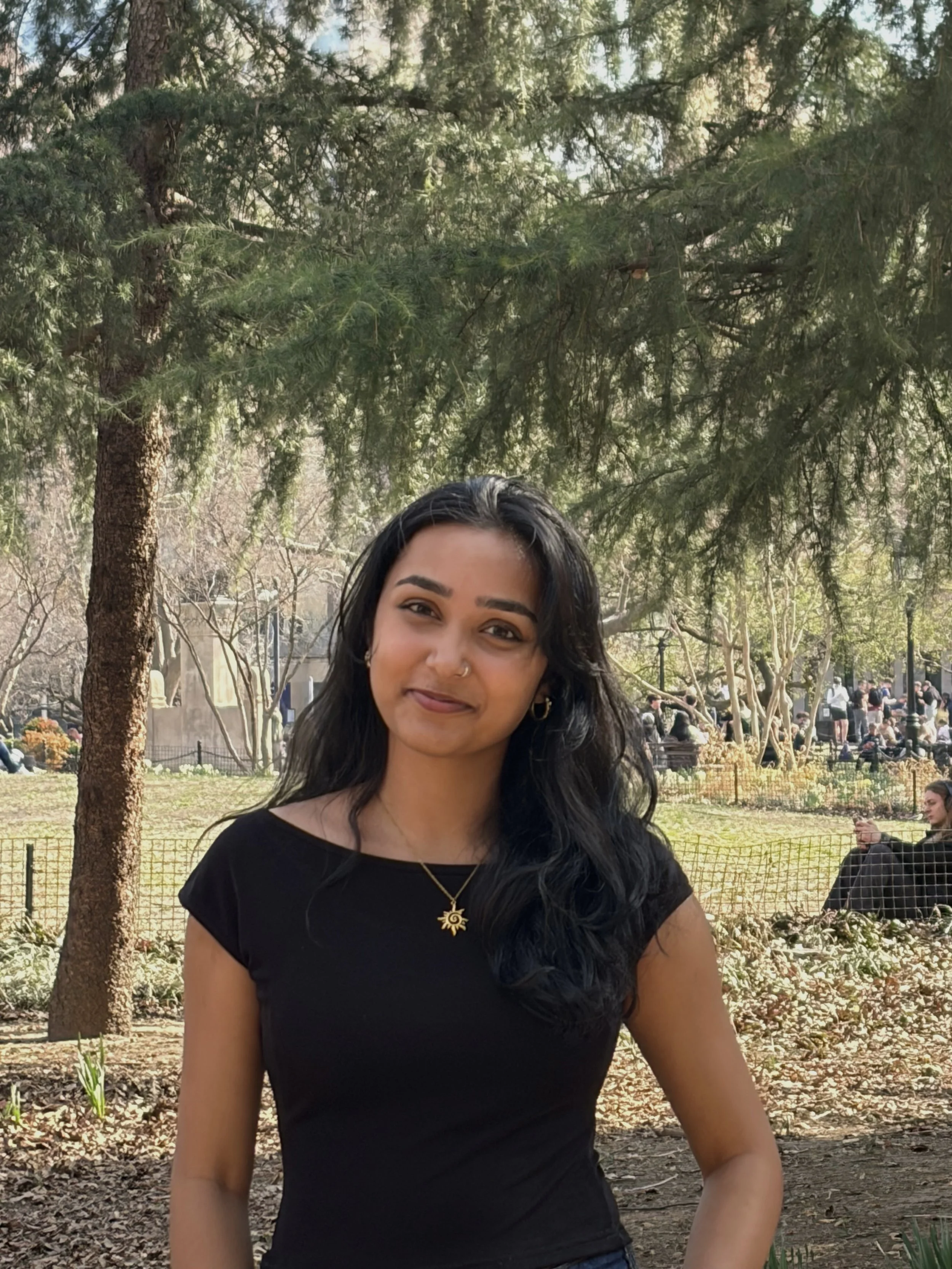
Photography by Jerry Stamatelatos
If you’re reading this, there is so much time for ordinary, beautiful things.
I turn 20 next month. It feels so impossible. I’ve been telling this to everyone I see with the craziest grin on my face. I know it’s not a typical big birthday, like 16 or 21 or 50, but when I was a kid, I didn’t dare to imagine being 20. I lived with such terrible pain — the kind that sits tight in your chest and travels up to your throat, spreading out to your arms and legs on the worst days. It was unbearable. Depression found me around eleven, and from then on, every birthday candle, every ladybug landing on my hand, and every eyelash I pulled out and blew away carried the same quiet wish: “Please, just let me feel not-depressed.”
There were happy moments throughout my childhood, and I'm grateful for them, but baseline happiness felt like a myth. That’s why I’d wish for this grand theoretical concept I called “not-depressed”, synonymous, I suppose, with normal. I'd watch other people move through their days seemingly without that constant heaviness and think, “What would it be like to not feel this way? To breathe easy?” In high school, I filled every quiet corner of my life with noise: club after club, program after program, anything to avoid being alone in a silent room where the feeling could roll in faster. It gave me something to control when everything else in my life felt so uncontrollable.
I didn’t tell most people how I felt, but I often think back to something my choir teacher told me in the wings of our auditorium, during one of our last performances. Fifteen of us girls needed purple-ribbon corsages tied to our wrists between songs. I always tried to do mine myself –– perfectly, pristinely –– because asking for help felt like a burden. I’d even help the others make beautifully even ties at the risk of leaving half a minute to tie my own. The first few times my teacher offered help, I said no, hoping she'd notice how capable I was. She didn't. By the sixth and final show, fourteen girls had made seven pairs, and I, as a result of my own actions, became the odd one out. That’s what my choir teacher noticed. She made an effort to ask again, whispering to me (despite her many reminders for us to stay silent in the wings), “You have to give up control: I know you can do it, but let me help you.” I don't even remember what the knot looked like. I just remember how nice it was to stick my arm out and let someone guide me.
That moment stuck. Giving up control, asking for help, letting someone else in, it all started to feel less like defeat and more like breathing room.
Things didn't change overnight. Depression came in waves, knocking me off my feet right when I thought I was stable and grounded. Things got better with medication, better with therapy, and better yet with a lot of time. I am so grateful for the people who stayed even when I was hard to be around. Because of them, and the small choices I made to ask for help, I'm looking forward to turning 20.
Yesterday, a ladybug landed on the back of my hand, and I caught myself wishing again—but not the old wish. The pain in my chest nowadays is from laughing stupidly hard at my friends' jokes (cackling, really). I wish for sunsets to be a little slower and for extra luck on my exams, and that someone will stop me on the street and give me $1,000 because hey, a girl can hope.
What I’m trying to say is that somewhere along the way, I stopped surviving and I started breathing. I don't panic in the quiet. Some friends tie the metaphorical ribbons when I can't, and I let them. I don’t know if it was all the wishing and charms that got me here, but even on hard days, I feel so immensely lucky.
If you're reading this, I want you to know that one day you won’t have to wish to feel normal anymore. You’ve already survived so much more than you give yourself credit for. There is still so much life and so much time ahead of you to experience all the ordinary, beautiful things you once didn’t think to wish for.
Arushi M., New York University
Connect With Us
To follow IfYoureReadingThis at NYU on Instagram, get in touch with our chapter, and learn about more resources available to NYU students, visit our chapter’s homepage.
AUTHOR CONTACT
This author has opted to allow readers who resonate with their story to contact them. If you would like to speak to the author of this letter about their experience, please use the form below.
