
Muskan P.
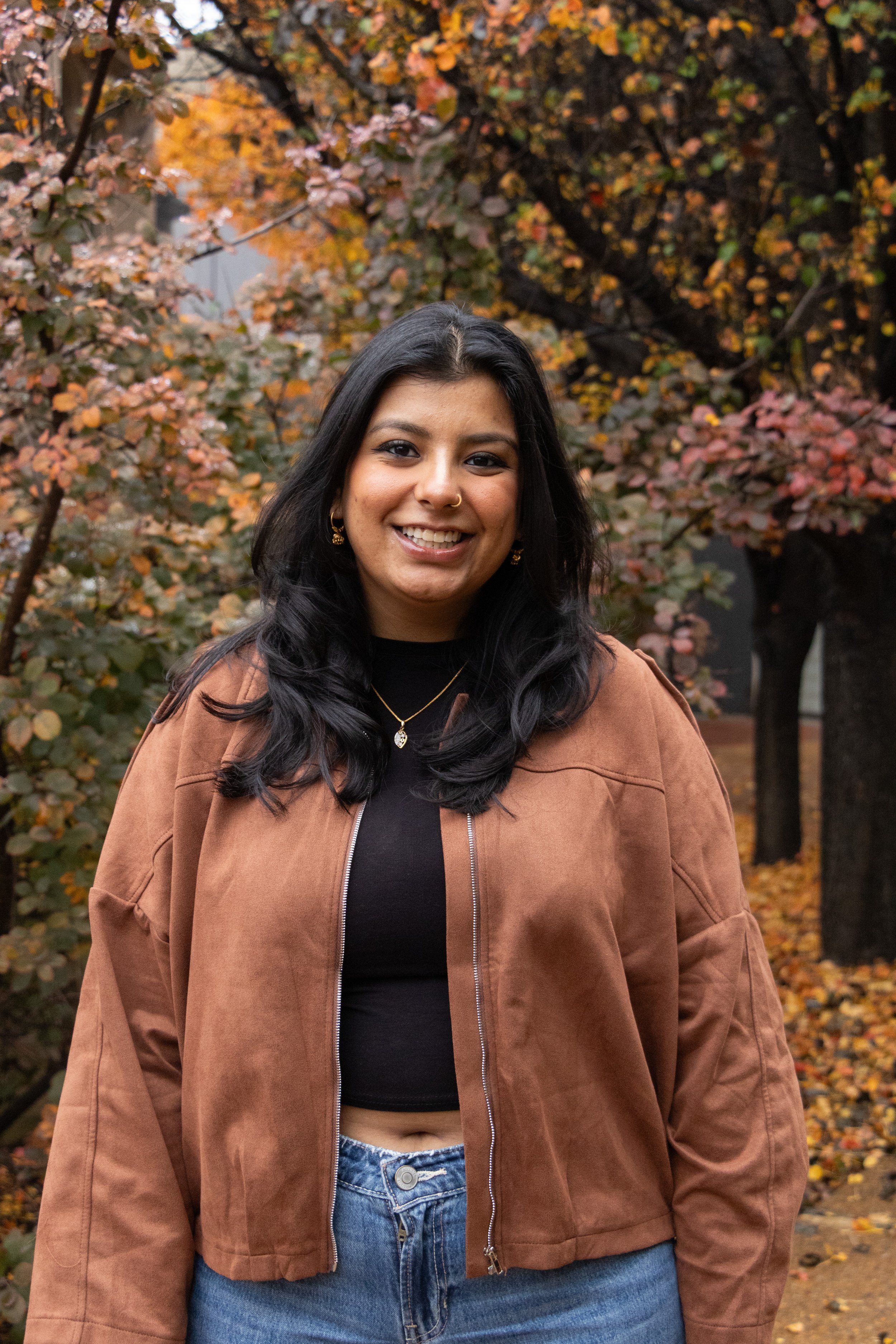
Photography by Bri Nitsberg
If you’re reading this, I hope you know that growth isn’t always loud.
Sometimes it looks like silently unlearning the mindset you spent your whole life being praised for.
I spent 18 years of my life growing up in the same area - an area where your value was centered around your grades, what kind of activities you involved yourself in, your leadership roles. Your worth was determined by how busy you were, how well you performed, and how perfect you were. That mindset was drilled into me by the time I reached early middle school: my worth was how involved I was at school, what my grades were, and how much I could push myself beyond exhaustion. At home, I was continuously told how I am not doing enough, how I should study more until my eyes burned red, constantly compared against my peers. Slowing down felt like failure.
Moving away from my hometown and coming to WashU was a big transition for me. Interacting with my peers who came from different towns but more importantly different mindsets was a new normal. This was when I realized deeply that my mindset had immensely shaped my mental health. In South Asian communities, mental health isn’t a priority - we push through, we stay grateful, we “don’t make things bigger than they are.” While I will always have a deep appreciation for my culture, as it is one of the more defining parts of my identity, this silence made it extremely difficult for me to admit that I had a lot of pent up exhaustion, burnout, and that I truly needed space. It made me believe that boundaries were selfish.
For the last two years, I’ve had to challenge this. This means making bigger decisions that feel unthinkable to the version of me who never said no - going no contact with family and choosing to stay here during breaks instead of flying back. That choice was and stays painful - it’s been hard to accept that this is the dynamic I will maintain with my family. It means acknowledging that I need time to breathe, to reset, to heal from the pressure of being everything to everyone. It means telling my parents that I wasn’t coming home, even when I knew they wouldn’t fully understand why. It means redefining my support system and understanding that my parents may not fully play a role in it. More importantly, it meant choosing my well-being over their expectations for the first time in my life.
Truthfully speaking, this is something that I am still learning. I still balance my feelings of guilt while accepting that this is the right choice for me. I’m learning to be proud of the distance and boundaries I’ve created - to grow into someone who can devise my own perspective and mindset as I take on the next significant stages in my life, while also honoring my own mental health and wellness.
I hope you understand that it is completely okay to outgrow the mindset that raised you. It’s okay to rest. It’s okay to choose yourself, even if it means making difficult decisions. Even if it may not feel right at the moment, if your healing looks like quiet boundaries instead of dramatic changes, that is OK.
I’m still accepting that choosing myself isn’t selfish - I owe it to myself after everything I’ve persevered through. It’s the first step toward becoming someone who can show up - for others and yourself - with honesty, compassion, and a kind heart.
Muskan P., Washington University in St. Louis
Connect With Us
To follow IfYoureReadingThis at WashU on Instagram, get in touch with our chapter, and learn about more resources available to WashU students, visit our chapter’s homepage.
AUTHOR CONTACT
This author has opted to allow readers who resonate with their story to contact them. If you would like to speak to the author of this letter about their experience, please use the form below.
