Lydia N.
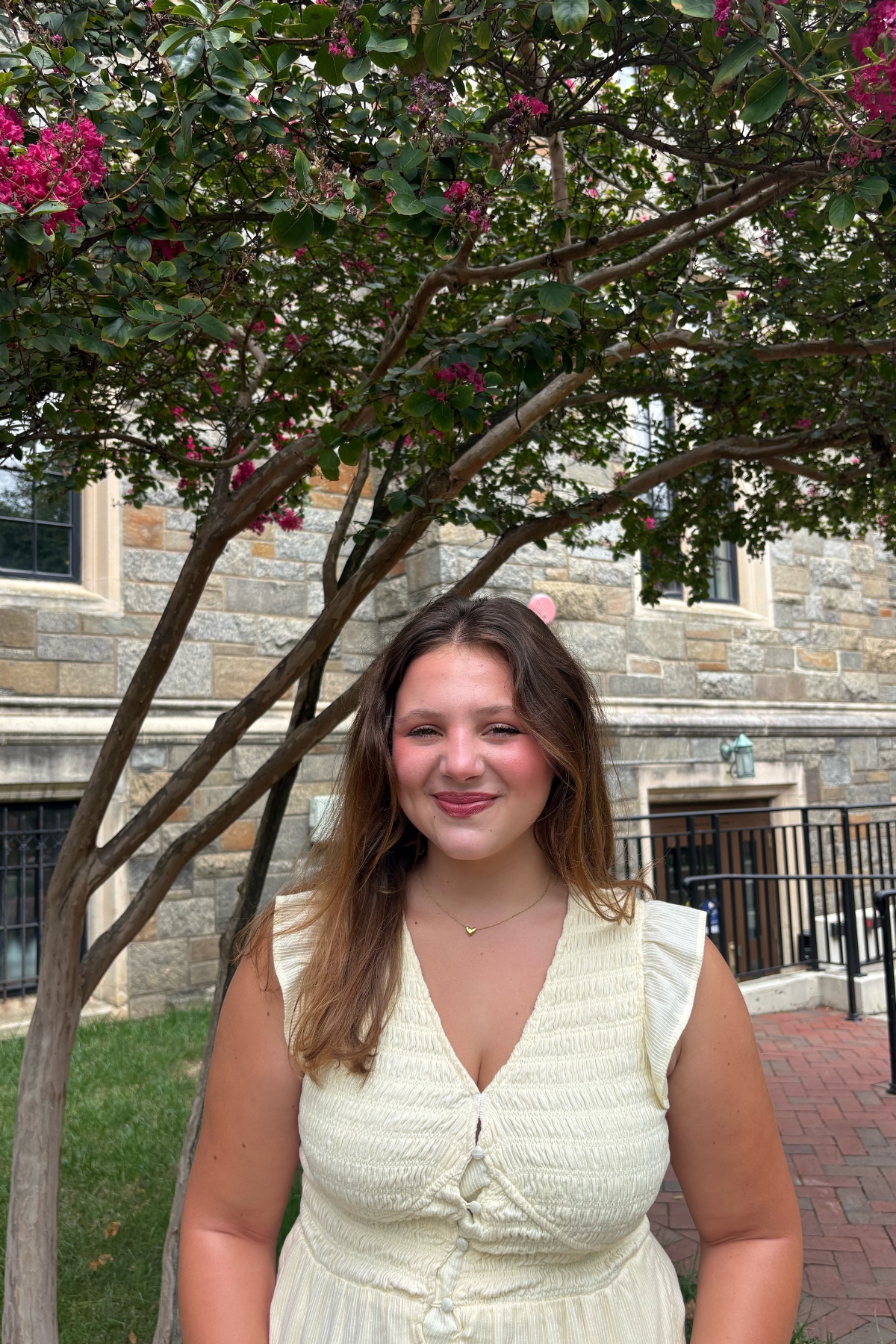
Photographed by Kaylee Matas
Before reading this letter, we'd like for you to know it discusses Lydia's experience with eating disorders, sexual assault, and suicide. If you think that reading about this will be distressing for you, we encourage you to take a pause before reading this letter, center yourself, and prepare any resources you may need to access after reading it. If you'd rather not read this letter, you can read a letter on a different topic by returning to the Georgetown home page.
If you’re reading this, your life will change, I promise.
Wow, have I struggled with my mental health over the years. So much so that at one point, I had a therapist practically dump me as a client for not getting better. Honestly, good for her. I definitely would not have been able to leave a review saying I got the results I wanted... unless those results were major depressive disorder instead of minor, which, newsflash, they were not.
Maybe I'll run you through my rock bottom for a second, just so we're all caught up to speed. In March 2025, during my gap year, I somehow ended up in Costa Rica. By "ended up," I mean I very much voluntarily signed up for a volunteering program there. The days were physically demanding: long hikes with heavy backpacks, beach clean-ups, restoration projects, painting schools. We slept in tents, lived out of sleeping bags, ate simple food, took cold showers, and spent weeks disconnected from our phones.
Sounds like the gap-year dream, right? The kind of story you'd tell your future kids. And it is. Just not for the reasons I expected.
I arrived in Costa Rica carrying a lot more than a backpack. I'd been struggling with an eating disorder for almost a decade, and by the time I got there, I was already incredibly unwell. Over the following weeks, things spiralled. My body was exhausted, my mind was consumed with the bulimia, and I was pushing myself far beyond what was safe. The scary part was that most people had no idea how much I was struggling. On the outside, I looked functional. On the inside, I was falling apart.
Eventually, I reached a point where I couldn't keep going. I was surrounded by beautiful scenery, incredible people, and experiences I should have been enjoying, yet I felt completely empty. Leaving the program felt like giving up at the time, but it ended up being the bravest thing I ever did.
When I returned to London, a series of events led me to an eating disorder unit in a psychiatric hospital, and that experience changed my life. For the first time in years, I wasn't trying to survive on my own. I learned how to eat again. I met people who understood what I was going through. I built relationships with nurses, therapists, and other patients who helped me believe recovery was possible. Looking back, deciding to ask for help saved my life.
I wish I could tell you that everything became easy after that, but it was the opposite. The best way I can describe it is this: imagine running a marathon, crossing the finish line, and then being told they forgot to time it and you'll have to do it all over again. I felt proud of the progress I'd made in recovery, but it turned out my eating disorder wasn't the only thing I needed to heal from. There were years of anxiety, depression, burnout, grief, and trauma that I had spent a long time trying not to think about. Recovery gave me enough space to finally see everything else that had been sitting underneath.
College began, and I struggled more than I expected. I felt lonely. I felt lost. I wasn't excited by much of anything. Some days, getting through the day felt like a full-time job. There were moments when I genuinely wondered how life could feel harder after I had already survived so much, but I did what I do best at: keep on keeping on.
I came back for the spring semester. I started a podcast called “Children of Divorce,” and I began talking about experiences I'd spent years keeping to myself. I kept going to therapy. I started building friendships; some lasted…and some didn't. I focused less on punishing my body and more on taking care of it, and ever so slowly, my days became fuller. My point is that things changed, but it didn’t happen overnight nor magically; I didn’t wake up one morning and feel suddenly healed. Things changed because I kept showing up. I kept attending therapy appointments. I kept eating meals. I kept applying for opportunities. I kept getting out of bed. I kept giving myself another chance, and eventually, all those tiny decisions started adding up.
Nowadays, I still have difficult moments, I still feel lonely, and I absolutely one thousand percent don’t have everything figured out, but is my life better than it was? There is no doubt about it, yes! When you're in the middle of something painful, it's easy to believe that things will always feel this way. It's easy to believe that you've already reached your limit, and then life somehow finds a way to challenge you again. But here's the secret I've learned: life is often a series of "it can't get worse" moments until one day, without realising it, you notice that things have gotten better, and the belief that things will get better is enough to keep going.
I've made it this far, I owe it to myself to keep going. I've seen things change before, so I have every reason to believe they'll change again.
So if you're reading this, keep going. Not by exhausting yourself. Not by pretending everything is fine. Just keep showing up. Do your best today. Then do your best tomorrow. Trust that the person you're becoming is worth meeting. It's going to get better, I promise.
Sending hugs to the whole big wide world right now. All my love, Lydia XXX
Lydia N., Georgetown University
Connect With Us
To follow IfYoureReadingThis at Georgetown on Instagram, get in touch with our chapter, and learn about more resources available to Georgetown students, visit our chapter’s homepage.
AUTHOR CONTACT
This author has opted to allow readers who resonate with their story to contact them. If you would like to speak to the author of this letter about their experience, please use the form below.