Dr. Robert V.
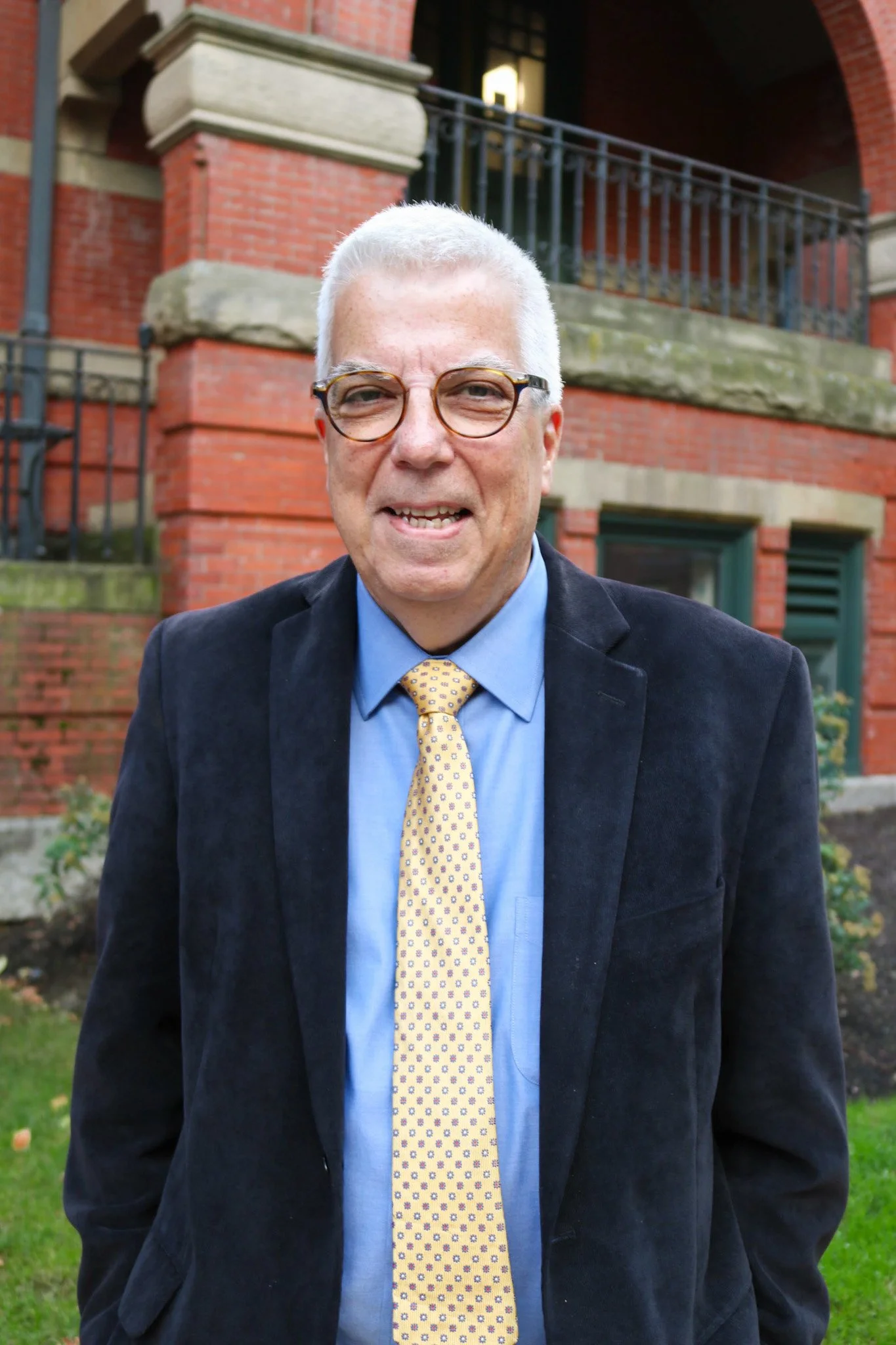
Photography by Emma Kraus
If you are reading this, have you thought about the impact of just one simple question?
I was fortunate to enjoy many years of clinical practice, much of which occurred in the busy clinical environment of a pediatric emergency department. Like many of you, I worried about keeping up with the endless volume of material that needed to be learned. Now, classroom time is no longer our only learning environment. Technologic advances provide access to web-based educational resources. Large language models advance our access to data. Developing the differential diagnosis for a collection of patient symptoms is now the task of ChatGPT. While I have no doubt that these advances have a role in medicine, they are also part of a disturbing trend that has moved us away from the patient’s bedside.
I am reminded of the words of a famous physician by the name of Francis W. Peabody. While addressing Harvard medical students in the mid-1920s, he remarked, “The secret of the care of the patient is in caring for the patient.” Given all the pressures that move us away from the patient’s bedside, in caring for the patient, we would be wise to listen to our patients. The “listening” that I am suggesting is not only about their symptoms, but also about their lives, their journeys and their challenges. Understanding our patients not only requires our astute diagnostic skills, but also our humanistic skills of compassion and empathy. So, how do we balance these?
When I was in training, I was taught by a very wise colleague to end each clinical encounter by asking one simple question to each patient: “What else can I do for you?” The answer to this is in many ways the foundation of providing humanistic care to our patients. In response to this question, a colleague of mine was asked “Can you help me find a lawyer?” Thus began the development of the nation-wide Medical Legal Partnership program. A different patient responded with, “Can you help me with my taxes?” And that question stimulated the development of StreetCred, a national program that builds economic mobility and health equity. Don’t get me wrong, when you ask your patients “What else can I do for you?” their answer may not lead to the development of a national program, but it can and will give you important insights to your patient and their lived experience. You will learn about their everyday struggles, such as the difficulty of obtaining health coverage, their child’s learning challenges, food and housing insecurity, and potentially other health related social needs.
Not only can listening and learning from our patients help us become better diagnosticians, but by asking, hearing and thinking creatively about how to support our patients, we demonstrate how much we care for our patients. It is well known that patients may not always remember what we have said to them during a clinical encounter, but they do remember how we made them feel, they remember whether we listened and how we cared for them. Of course, you need not be a clinician nor be in a therapeutic relationship with someone to care and to listen. The power of a simple question is not strictly limited to what may be revealed in their response. Even if there is nothing you can do or no problem to solve in another’s life, the mere fact of being seen and considered is an act of healing in its own right. Curiosity is always in our toolbox, and we’d all stand to gain from knowing each other a little better.
Yes, keep studying and make good use of the clinical resources available to you, as they are important to your journey as a physician. I certainly made good use of them. However, as I look back on my own career, I have learned so much from my patients, perhaps more than any text or seminal article ever taught me. Dr. Peabody was correct; “the secret of the care of the patient is in caring for the patient.” To that, I would add: listening to your patient.
Dr. Robert V., Boston University
Connect With Us
To follow IfYoureReadingThis at Boston University on Instagram, get in touch with our chapter, and learn about more resources available to Boston University students, visit our chapter’s homepage.
AUTHOR CONTACT
This author has opted to allow readers who resonate with their story to contact them. If you would like to speak to the author of this letter about their experience, please use the form below.