
Fighters for TFAS
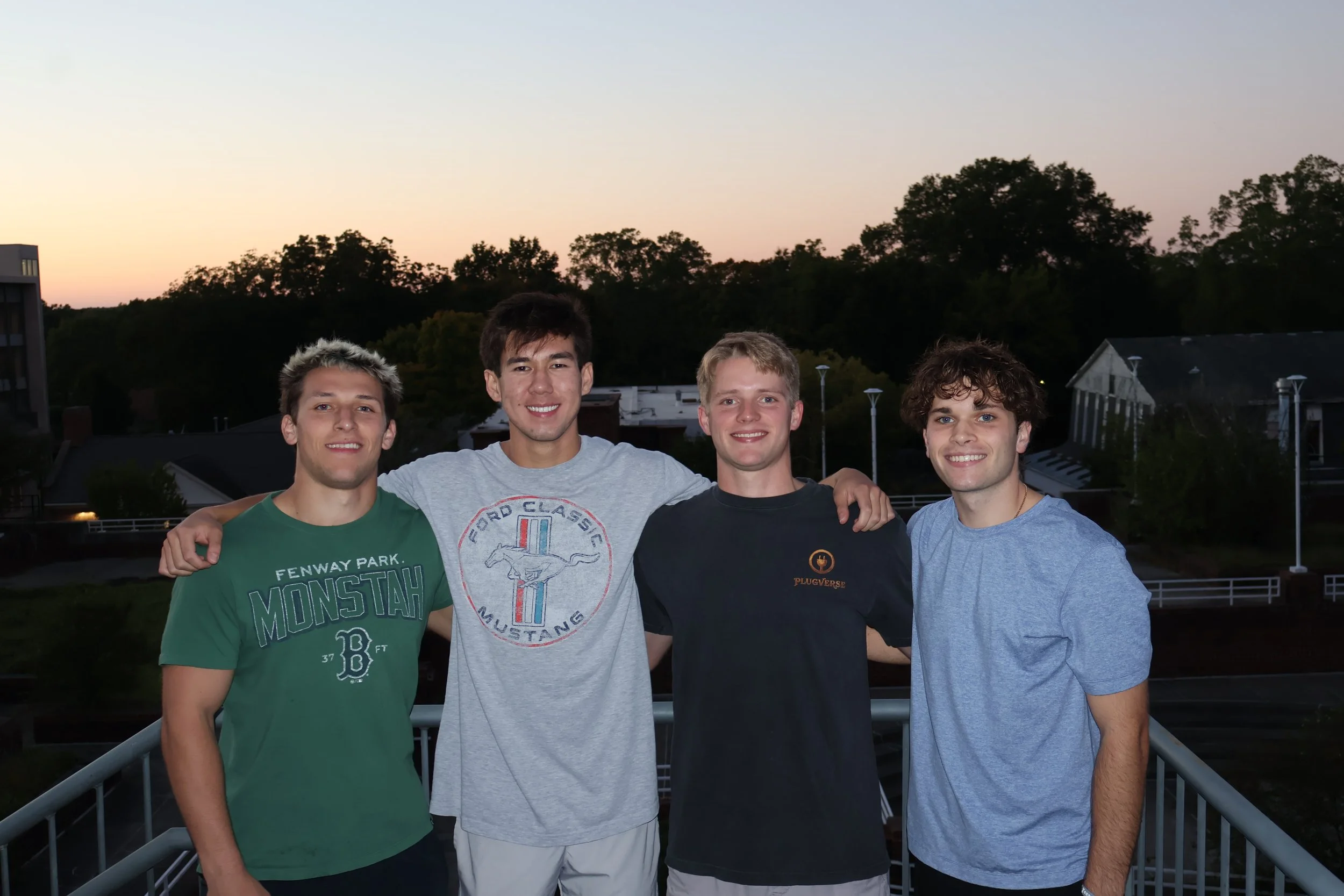
Photographed by Tatum Murr
If you’re reading this, there is always something worth fighting for.
This week, that fight is taking on a literal meaning. On Thursday, Oct. 8, 18 UNC students will step into the boxing ring for Chapel Hill’s inaugural Fight Against Suicide, an event dedicated to bringing our community together in support of suicide prevention and mental health awareness.
The Fight Against Suicide (TFAS) uses boxing as a way to spark conversations about mental health, challenge the stigma around suicide, and bring communities together for a shared cause. By encouraging students to step outside their comfort zones and fight for something bigger than themselves, TFAS reminds us that no one should have to face their struggles alone.
That message closely aligns with the mission of If You’re Reading This: to remind people that they are seen, supported, and never alone in their struggles. While our approaches may look different, both organizations believe in the power of vulnerability, connection, and community to make a difference.
The fight extends far beyond the ring. Behind each fighter is a reason for showing up — a person, an experience, or a belief that reminds them why this cause matters. In partnership with The Fight Against Suicide, we asked four of this year’s fighters to share what they are fighting for and what mental health means to them. These are their “whys.”
Tommy Beason, Fighter.
If you’re reading this, remember that kindness, compassion and connection can save lives.
This summer, I received a text out of the blue from one of my fraternity brothers that left a profound impact on me. He explained that The Fight Against Suicide (TFAS) was looking for UNC students to box in an event coming to Chapel Hill for the first time. I had never boxed before, nor had I truly even considered it. However, the moment I researched TFAS, I knew that I had to sign up.
I lost a dear friend to suicide in the fall of 2021, and ever since then, I have longed to help prevent such tragedies from cutting the lives of our friends and neighbors short. After struggling to process this loss, I decided to found a service club in his honor, bringing together the group of his friends who once contributed countless hours of community service under the leadership of our mothers. That service club, which I named Kindness for Coble, was inspired by the importance of taking initiative. Now, another opportunity to do so is right in front of me through TFAS, and I feel compelled to accept the challenge.
Mental health has become a more prominent topic in our society since COVID-19, largely due to the isolation that the pandemic caused. Years later, many people continue to struggle with feelings of loneliness and a lack of support systems to help them fight their internal battles. TFAS is actively combating that isolation by bringing together thousands of people across the country for a single cause. Although I am one of the 18 boxers participating in this event, every person involved in Fight Week is helping fight against suicide. TFAS in Chapel Hill is not about the nine individuals who win their fights. Rather, it is about the hundreds of thousands of dollars raised and the meaningful efforts made to spread awareness for suicide prevention and mental health across the country. These resources will strengthen our communities with the love, compassion, and understanding needed to ensure that every person feels truly valued, and they will undoubtedly save lives.
Liam Gates, Fighter.
If you’re reading this, you never have to fight your internal battles alone.
My name is Liam Gates, and this is my why for the fight against suicide and what mental health means to me.
I have never considered myself a boxer, but when I learned that The Fight Against Suicide was coming to Chapel Hill for the first time, I knew I had to be part of it. My family members and close friends have struggled with mental health, and I have seen how isolating that struggle can be. Often, the weight of feeling alone is just as heavy as the pain itself. I am stepping into the ring for those who never had the chance to find a way through it, and for those who are still quietly fighting today.
To me, mental health comes down to whether someone has people who will listen, notice, and stay. At a school like UNC, where everyone is busy and seems as though they have it all figured out, it is easy to overlook the signs of mental struggling. That is why the rest of Fight Week matters just as much as the fight itself. The money we all have raised these last few months goes directly toward suicide prevention and mental health awareness, and programs like QPR training have given students practical tools to recognize the warning signs of suicide and start a conversation that could save a life. I want to help build a campus community that is more aware, more compassionate, and more hopeful, where checking in on one another is second nature and no one feels they have to carry their burdens in silence. Our fights will last only four minutes and thirty seconds, but the conversations it sparks outside of the ring will last far beyond that.
Harrison Roy, Fighter.
If you're reading this, it's okay to slow down. You don't have to win every round to win the fight.
I've never boxed before, but I'm a huge movie fan. Creed, Rocky I through V, name a boxing movie and I've probably seen it. They all follow roughly the same storyline: get knocked down, train hard, and by the end, that perseverance leads to victory.
But the movie I think applies most to The Fight Against Suicide isn't a boxing movie. It's Manchester by the Sea.
The movie follows Lee Chandler, a rough Bostonian handyman who lost his three children in a house fire he accidentally caused, and his marriage along with them. Years later, his brother dies, and Lee returns home to look after his teenage nephew. It seems like Lee might take his nephew in for good, symbolizing a fresh start. In any other movie, this is where the redemption begins. But this movie is different.
Lee doesn't magically become "fixed." After grappling with the expectations of rising to the occasion, he admits he isn't ready to look after his nephew. Still, he doesn't give up on their relationship. He looks for an apartment with a spare room so his nephew can visit. He doesn't make it all or nothing. He accepts that he needs time to repair and restore his own life.
I think there's something to learn from that, especially at UNC.
Social media makes everything so visible: job announcements on LinkedIn, vacations with seemingly perfect friends, picture-perfect families. But these images are just snapshots of our lives. A beach photo doesn't show the long TSA line or the post-travel sickness. A family portrait doesn't show the arguments or complicated relationships. Still, we compare ourselves to these images, and eventually, the snapshots become our standard.
So we try to keep up. Get into a great school, join that club, land that internship, go to that event. You can never keep up with the Joneses, but you try anyway. It's exhausting.
I came into UNC with a chip on my shoulder, wanting to be as "successful" as possible. Between maintaining a good GPA to apply to the B-school, training to walk onto the football team, and countless club involvements, I ran myself into the ground. Finals week came around, and I was miserable. I remember pulling all-nighters and pushing myself to the point of heart palpitations. I was doing everything I thought I should be doing, but I wasn't enjoying much of it.
Eventually, I gave myself some grace. I made time to wrestle again, hang out with friends, and watch more movies. My life got substantially better, and I didn't have to give up my ambitions to make it happen.
I've been fortunate not to have lost anyone close to me to suicide, and I recognize that my experience with stress is different from the struggles many people face. But I worry about how many students feel that slowing down is somehow synonymous with falling behind. That's why I'm stepping into the ring with TFAS.
There's plenty of merit in working hard and developing grit. But even in boxing, fighters have corners. They have people who help them recover between rounds. And sometimes, they need to recognize when they've had enough.
Liam Clay, Fighter.
If you're reading this, you don't have to take every hit alone.
Someone close to me lost his battle with suicide. I was there for many of his hardest rounds, but I never knew how to help him get through them. I could tell he was hurting, and I wanted so badly to make it better, but I couldn't find the right words. He was so charismatic and stubborn. I asked how he was doing and could never get his mouth to articulate what his eyes were telling me. It is easy to say this now, and the truth is, at that moment, I was scared of saying the wrong thing. I still carry that with me, and I think of him every time I hear someone answer “fine” a little too quickly.
Later, I struggled too. I kept everything to myself because I believed asking for help meant I had failed, and I didn't want to burden anyone. When I finally broke and reached out, I was stunned by how many friends were in my corner. I don't say this to say I understand exactly what you’re going through, because nobody can understand exactly what you’re going through, but that doesn’t mean they can’t be there for you.
That is why I'm stepping into the ring. Boxing looks like a solo sport, but nobody makes it to the final bell alone. So check on your people, and when they tell you they're fine, ask again. If you're the one on the ropes right now, reach out. You have more people in your corner than you realize.
From The IYRT Team
While each fighter has a different reason for stepping into the ring, their stories share a common message: no one should have to fight their battles alone. Whether it’s checking in on a friend, asking for help, or simply reminding someone they matter, the smallest acts of kindness can make a difference.Welcome home, Tar Heels. Let’s look out for one another.
The fight against suicide doesn’t end when the final bell rings; it continues in the conversations we have, the connections we build and the ways we show up for one another.
IYRT & Fighters for TFAS 2026, University of North Carolina at Chapel Hill
Connect With Us
To follow IfYoureReadingThis at UNC on Instagram, get in touch with our chapter, and learn about more resources available to UNC students, visit our chapter’s homepage.
