Ashton A.
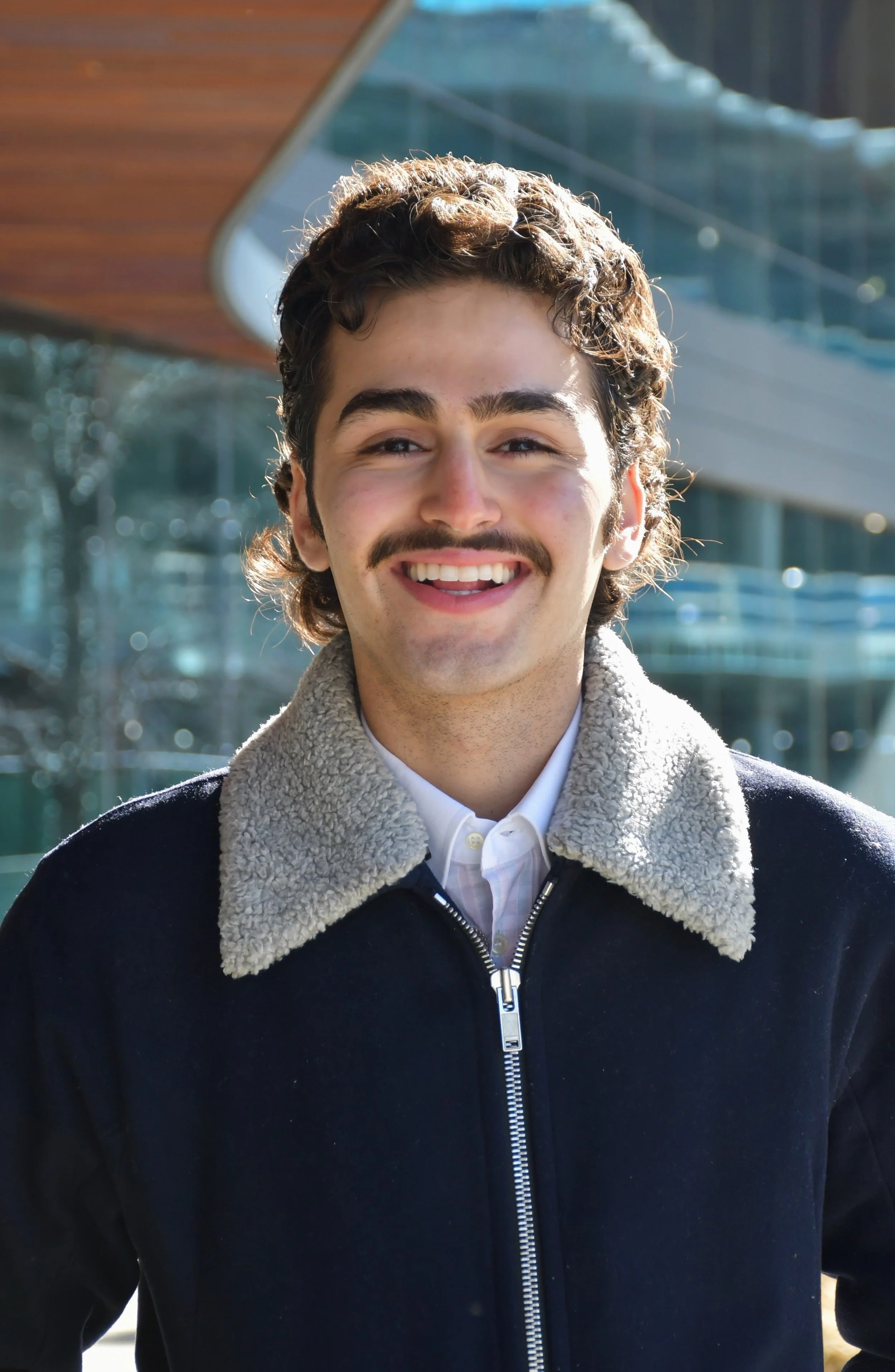
Photography by Isa Vivona
If you’re reading this, confidence can coexist with vulnerability.
In this interview, an If You’re Reading This team member sat down with Ashton to learn more about the communities and routines that keep him grounded. Ashton shares how he replenishes his energy in the midst of a busy college schedule, what charisma means to him, and how finding both competitive and barrier-free creative spaces has shaped his confidence and identity on campus.
IYRT Team: What fills your tank when you’re feeling overwhelmed?
Ashton: I’ve always heard this question in terms of spoons. There are activities in your life that give you spoons, and there are activities in your life that take away spoons. In college, we’re very much in a spoon deficit because there are so many things that require our mental resources–whether that’s classes, career uncertainty, and extracurriculars. I feel like I’ve mastered how to get back some spoons.
This may not work for everyone, but for me, waking up a significant amount of time before my first class gives me the energy I need to take on the day. I’ve been setting my alarm at 7 a.m. to be with myself and reflect on the day I want to have ahead. Also, I really focus on fueling my body and that’s what gives me the energy to function well.
IYRT Team: People in general describe you as charismatic. Can you tell us what that word means to you?
Ashton: That’s really sweet. Right now, I’m taking a leadership and organizational class with Professor Acuna and we’ve talked about charisma a lot. I think it’s a hard word to define. When I think about charisma, I think about my ability to strike up conversation with people–no matter who they are. It’s all about being open to others.
Another quality that makes me feel charismatic is being vulnerable. I am very confident, but I’m also aware of my struggles and the importance of showing others my weak side. It’s all about having a positive outlook on even the toughest problems.
IYRT Team: How have the creative communities you’re a part of on campus shaped your identity?
Ashton: Prior to coming to Northwestern, I went to an all boys school for fourteen years and I felt like the community was valued very heavily there. It wasn’t until I started my freshman year that I realized how much I had taken that strong community for granted. But, luckily for me, I quickly found Spoon University and A&O at Northwestern where I was able to socialize with people outside of my dorm and learn more about topics I’m passionate about.
IYRT Team: When you started applying to clubs, did you ever struggle with feeling excluded?
Ashton: The process of applying to A&O was pretty rigorous because it’s a competitive club many students want to join. I remember writing a hypothetical campaign I would do for Dua Lipa and enduring multiple interview rounds. It was all worth it to find the community I did; but, when forming Blush (a beauty, health, and wellness publication), I knew I wanted writers to feel like they could publish whatever stories they were interested in researching. In the end, I came to understand that the status symbol that comes with being part of a competitive organization feels good, but it’s also refreshing to balance it with participating in a barrier-free extracurricular.
IYRT Team: Do you have any advice for someone who’s struggling with self-doubt or comparison?
Ashton: It’s definitely taken me time to figure out how to handle those moments of self-doubt. While a lot of students utilize social media in a positive way–especially freshman and sophomore year–to connect with others, I would also encourage students not to allocate so much of their day comparing themselves to their peers. I would get caught up hyperfixating on new material goods I wanted to buy to keep up with them. I didn’t realize how much doing so drained me mentally. It felt like an indulgence to take a break and watch social media, but it was actually just fueling my mental comparisons. Given all this, my one piece of advice is this: Limit social media to the point where you feel like you can still be present with yourself.
IYRT Team: People in general describe you as charismatic. Can you tell us what that word means to you?
Ashton: That’s really sweet. Right now, I’m taking a leadership and organizational class with Professor Acuna and we’ve talked about charisma a lot. I think it’s a hard word to define. When I think about charisma, I think about my ability to strike up conversation with people–no matter who they are. It’s all about being open to others.
Another quality that makes me feel charismatic is being vulnerable. I am very confident, but I’m also aware of my struggles and the importance of showing others my weak side. It’s all about having a positive outlook on even the toughest problems.
IYRT Team: How have the creative communities you’re a part of on campus shaped your identity?
Ashton: Prior to coming to Northwestern, I went to an all boys school for fourteen years and I felt like the community was valued very heavily there. It wasn’t until I started my freshman year that I realized how much I had taken that strong community for granted. But, luckily for me, I quickly found Spoon University and A&O at Northwestern where I was able to socialize with people outside of my dorm and learn more about topics I’m passionate about.
IYRT Team: When you started applying to clubs, did you ever struggle with feeling excluded?
Ashton: The process of applying to A&O was pretty rigorous because it’s a competitive club many students want to join. I remember writing a hypothetical campaign I would do for Dua Lipa and enduring multiple interview rounds. It was all worth it to find the community I did; but, when forming Blush (a beauty, health, and wellness publication), I knew I wanted writers to feel like they could publish whatever stories they were interested in researching. In the end, I came to understand that the status symbol that comes with being part of a competitive organization feels good, but it’s also refreshing to balance it with participating in a barrier-free extracurricular.
IYRT Team: Do you have any advice for someone who’s struggling with self-doubt or comparison?
Ashton: It’s definitely taken me time to figure out how to handle those moments of self-doubt. While a lot of students utilize social media in a positive way–especially freshman and sophomore year–to connect with others, I would also encourage students not to allocate so much of their day comparing themselves to their peers. I would get caught up hyperfixating on new material goods I wanted to buy to keep up with them. I didn’t realize how much doing so drained me mentally. It felt like an indulgence to take a break and watch social media, but it was actually just fueling my mental comparisons. Given all this, my one piece of advice is this: Limit social media to the point where you feel like you can still be present with yourself.
Ashton A., Northwestern University
Connect With Us
To follow IfYoureReadingThis at Northwestern on Instagram, get in touch with our chapter, and learn about more resources available to Northwestern students, visit our chapter’s homepage.
AUTHOR CONTACT
This author has opted to allow readers who resonate with their story to contact them. If you would like to speak to the author of this letter about their experience, please use the form below.