
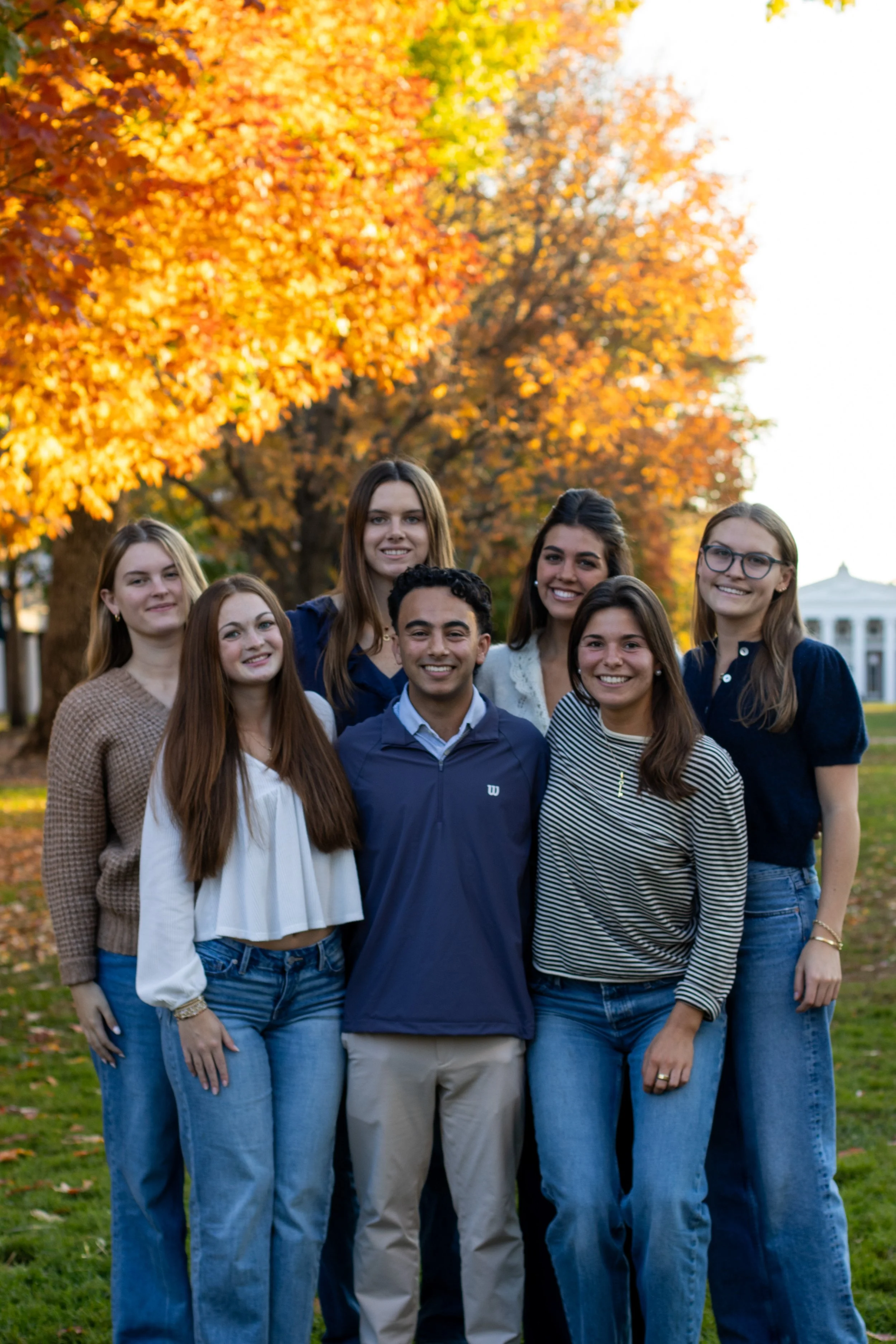
Photography by Catherine White.
If you're reading this, your feelings count.
We're One Love at UVA: a group of students working to help people learn the signs of a healthy relationship, and spot the unhealthy ones early. All in honor of Yeardley Love. Yeardley was a UVA student whose life was tragically cut short by her ex-boyfriend. Her family started One Love to educate other young adults so they would know the signs before issues could escalate. That's why we exist, and it's why this letter isn't about having the perfect relationship. It's about labeling what you're feeling and identifying what is healthy and what isn't. Everyone is in relationships, and everyone can learn how to love better.
Within One Love, we teach the ten signs of a healthy relationship; comfortable pace, honesty, respect, kindness, healthy conflict, trust, independence, equality, taking responsibility, and fun. These signs are important to understand, and the first place we notice them is within our feelings.
Where
When your partner makes you feel guilty for making plans without them, you might start to question your independence. When they constantly check your location "because they worry about you," you might wonder whether that's care or control. When they apologize and then do the same harmful thing repeatedly, you might realize that accountability takes more than words. When you rehearse a text before sending it, wondering which version won't start a fight, that's a sign that conflict might not be healthy.
Rationalization
You might be telling yourself it's not that bad. That other people have it worse than you do in your relationship. That they didn't mean it, that you're too sensitive, that you should be grateful for the good days. That makes sense, the good days are real, and they're exactly what makes everything harder to see clearly. But the signs exist for this exact moment: the one where nothing dramatic has happened, and something still doesn't feel right. Relationships are complicated and complex, we all have our reasons to stay. Be honest with yourself, trust your gut, and always know your feelings are real.
Me
We know this is easier said than done. We teach these signs on a weekly basis, but it is even hard for me to admit to myself when we see the bad signs in our own relationships. Looking at our relationships through an honest lens is hard, and confronting real issues is even harder. It's much easier to recognize the signs in someone else's relationship than to confront them on our own. We often tell people that helping a friend recognize an unhealthy relationship may take multiple conversations. But the truth is, sometimes it takes multiple conversations with yourself, too.
Approach
You don't need proof, or a label, or a story dramatic enough to tell someone else. Discomfort is enough of a reason to pause and pay attention. Noticing is a step. Talking it through with a friend, with someone you trust, with us is a step, too. You don't have to decide everything today. Taking an honest step back, and applying the signs may help you find some clarity. The more we learn to recognize these signs in our own relationships, the better we can help others do the same.
Value
Our relationships should add to and improve our lives, not be a source of stress or constant anxiety. The people who are lucky enough to be in each of our lives, should help fill our cups, not drain until there’s nothing left to give. Every relationship has really great moments, and some moments where things are hard; but when the hard starts to outweigh the good, something has to change. Love shouldn’t have a price, love shouldn’t make you have to choose, and love shouldn’t make you lose yourself. You deserve to feel seen, heard, and loved.
So if you're reading this, wondering whether what you feel is enough to matter: it is. Your feelings count. You count. And above all, love should feel good.
One Love, University of Virginia
Please reach out to us or to one of the following resources if you find yourself in a situation where you might need support:
Love is Respect
www.LoveIsRespect.org | 1-866-331-9474 or 1-866-331-8453 | text “loveis” to 22522
If you want to talk to someone, need advice about your relationship or a loved one’s relationship, or if you have legal questions.
National Domestic Violence Hotline
1-800-799-SAFE (7233) | www.thehotline.org
NDV Hotline provides lifesaving tools and immediate support to enable victims to find safety and live lives free of abuse. Call if you would like more resources or information, or if you are questioning unhealthy aspects of your relationship.
National Sexual Assault Hotline
1-800-656-HOPE | www.rainn.org
The National Sexual Assault Hotline provides basic information for victims or friends/family of victims, short-term crisis intervention and support, answers to questions about recovering from sexual assault, and resources to assist with the reporting process via hotline or chat.
The Trevor Project
www.thetrevorproject.org/ | 1-866-488-7386
The Trevor Project is the leading national organization providing crisis intervention and suicide prevention services to lesbian, gay, bisexual, transgender and queer (LGBTQ) young people.
Connect With Us
To follow IfYoureReadingThis at UVA on Instagram, get in touch with our chapter, and learn about more resources available to University of Virginia students, visit our chapter’s homepage.
AUTHOR CONTACT
This author has opted to allow readers who resonate with their story to contact them. If you would like to speak to the author of this letter about their experience, please use the form below.