Nature Heals
The relationship between the outdoors and mental health:
Nature is our oldest, most accessible, and perhaps most underrated tool for improving mental health. Spending time outdoors, especially in natural settings (like “green” and “blue” spaces – more on that in a little), is consistently linked with better mental health, though context and quality of nature matter.
Many robust studies (like systematic reviews and meta-analyses) have found nature-based outdoor activities (like gardening, exercising outside, and wilderness therapy) reduce depression and anxiety, as well as increase positive mood and wellbeing in adults, including those currently struggling with their mental health (1, 2, 3).
But the effects don’t just stop at the individual. Large multi-country and COVID-era studies have shown that more frequent visits to green/blue spaces like gardens or parks are associated with less stress, depression, and anxiety, as well as better general mental health and wellbeing at the population-level (4, 5, 6).
How can the outdoors help my mental health?
From what scientists and researchers have found so far (and believe us, there’s a lot of research out there), exposure to nature improves mental health in many ways (7).
Stress reduction: Spending time in natural outdoor environments is linked to lower perceived stress.
Attention restoration & mood: Natural settings help “reset” attention and reduce rumination (aka repetitively focusing on negative things like emotions, problems, and past mistakes).
Physical and social activity: Many outdoor experiences involve movement and social contact, both of which are beneficial for mental health.
Nature connectedness: Feeling emotionally connected to nature itself is linked with higher well-being and lower depression/anxiety, sometimes more than visit frequency.
What is a “green space” or a “blue space”?
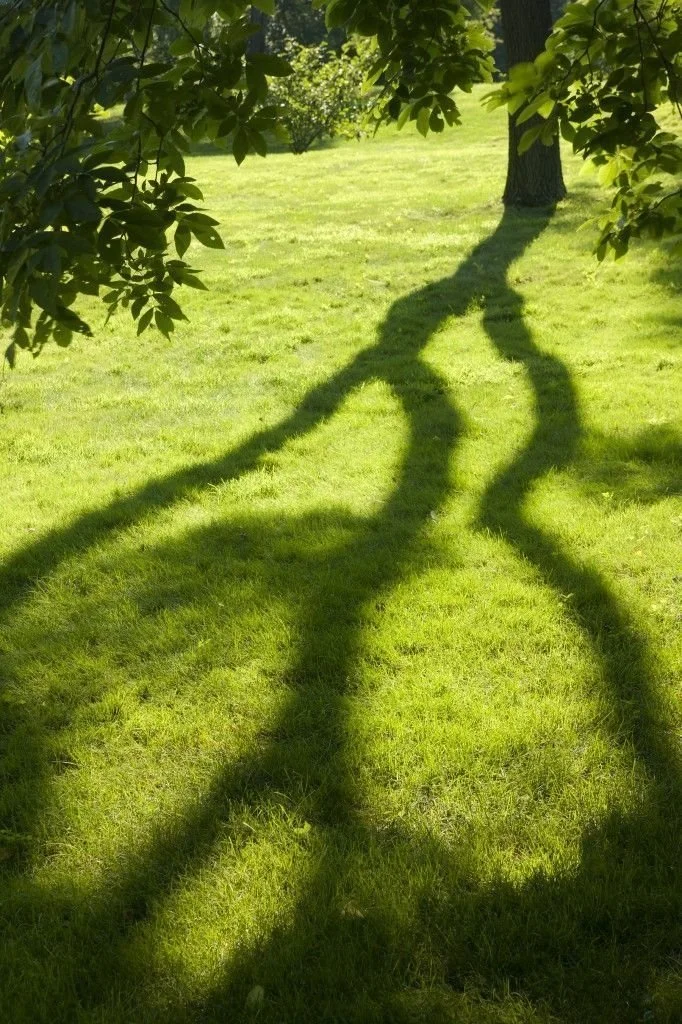
Green spaces are land in urban or residential areas partially or completely covered with grass, trees, shrubs or other vegetation (8). These can include:
Public parks
Community gardens
Green roofs
Streets with trees
The main quality that a green space requires is greenery. These green spaces help us mentally and also have a positive environmental impact by cooling cities, improving air and water quality, and supporting biodiversity (9).
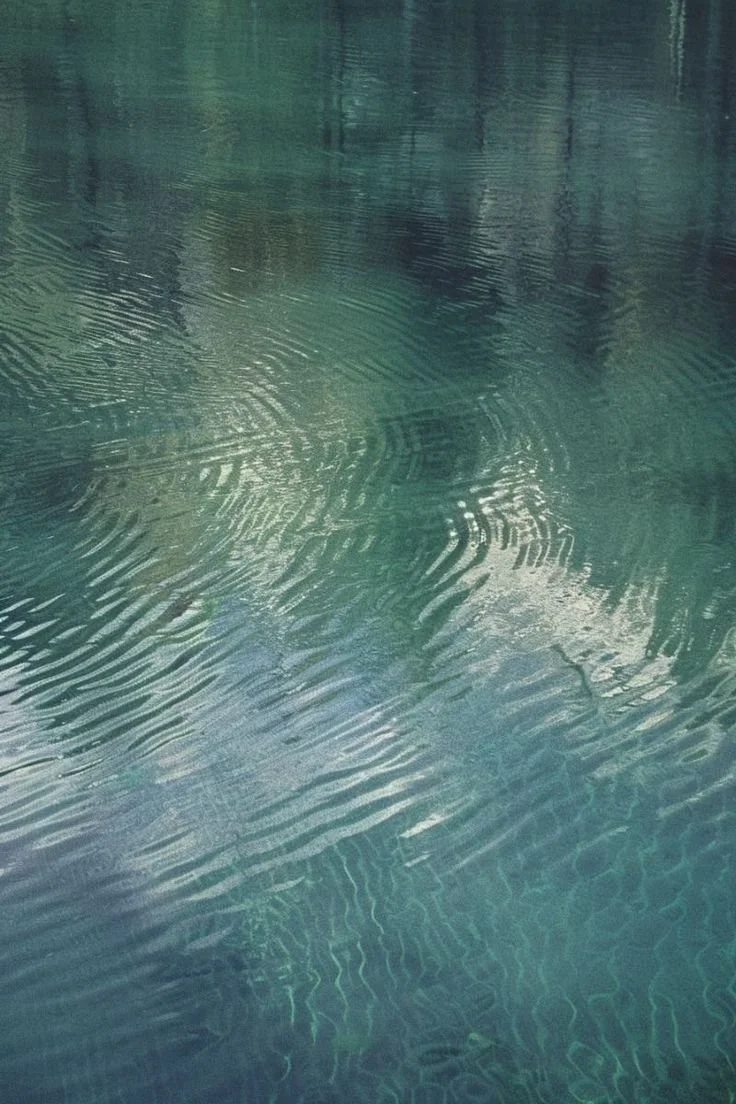
Blue spaces are outdoor, natural or man-made environments that are centered around water (10). Think:
Oceans
Rivers
Urban fountains
Exposure to green space can improve life satisfaction and help regulate stress (11,12). Exposure and proximity to blue space are linked to positive mental health and well-being (12). And in many places, green and blue places overlap, giving you the benefits of both at once.
So, what are some actual ways I can use nature to improve my mental health?
The good news is you don’t need to do anything extreme to benefit from nature, and spending time outdoors can look different for many people (7, 13). Some activities can include:
Take a walk outside (in the morning with coffee, as a break during work or studying, in the evening with your roommates)
Exercise outside (a run – even just 1 mile, YouTube yoga, bike ride, pickleball with friends)
Study or read on your campus quad/lawn, or in a park near your home
Gardening (whether you have room for a yard garden, or even a planter box)
Sit somewhere with a view of nature (13)
Incorporating nature in bite-sized pieces can make it more realistic. Even small interactions can make a difference.
What is the most effective way to use nature to improve mental health?
One systematic review and meta-analysis (aka a study that reviewed lots of previous research to pool the findings) found that the optimal “dose” of nature-based interventions for mental health ranged from 20 to 90 minutes. Additionally, the most effective interventions or changes were done for 8 to 12 weeks. Need even more specifics? Gardening, exercising outdoors, and nature-based therapy were specifically found to improve mental health outcomes in adults, including those with pre-existing mental health problems (1).
What if I can’t access nature or green/blue spaces easily?
Theoretically, anyone has access to nature – but realistically, not everyone does. One of the best things about nature is that it is free and all around us, but there are many other factors at play here. Access can depend on where someone lives, their ability to reach green spaces, their proximity to walkable areas, or the availability of public transportation. When all these factors are taken into account, nature can become less free or accessible (14). Living in certain places (or temperatures) can make it difficult to spend time outside, but there are a couple ways you can still tap into the natural world.
Indoor plants can be an impactful addition to your space and your well-being. While research is ongoing, indoor plants are generally associated with reduced stress and improved mood. Additionally, rooms with plants can be seen as more welcoming and peaceful, which can lead to a better quality of life (15, 16).
Need more ideas? Check out this resource from Yale Sustainability on reconnecting with nature in an urban environment, and this resource from the National Environmental Education Foundation on embracing the outdoors in the winter.
How exactly does nature improve mental health?
The short answer? Scientists don’t entirely know yet. Some research suggests walks in nature can decrease activation to a part of our brain called the amygdala (one of the key parts that processes fear and stress (17). Other studies show that natural environments can decrease cortisol levels (this is the hormone often called the “stress hormone”) (18, 19). So far, it seems like nature reduces both neural (think the brain and our nervous system) and hormonal (some of the body’s chemical signals) stress responses (1, 20).
Why does nature feel so refreshing?
One explanation comes from something called the Attention Restoration Theory. The idea is that day-to-day life constantly pulls our attention in ways that wear down our attention reserves. Nature, on the other hand, can engage our minds in a way that lets our attention reset without demanding more effort. This can help produce the feeling of refreshment and deeper focus (21).
Another idea that helps explain why nature feels so good to us is the Biophilia Hypothesis. It suggests that, due to evolution, humans have an innate desire to be outside and among living systems. In other words, our brains might expect a certain amount of greenery (7).
Can nature and therapy intersect?
Yes! Some therapists use ecotherapy in their sessions in order to improve mental health and well-being even more than office therapy might. Although there are different ways to do this, it is slowly but surely growing in the field (22). Researchers have taken the concept of ecotherapy and constructed their own programs with a variety of interventions. Ryan Reese, PhD is a psychotherapist in Oregon who helped develop a system called EcoWellness. Reese introduced EcoWellness into a pilot study, in which he developed a six-week outdoor therapy curriculum that combines fly-fishing and mindfulness instruction (23).
Other psychologists have introduced walking therapy, in which therapy is conducted outdoors, in conjunction with exercise and fresh air. Thomas Doherty, PsyD, adds nature into his work by encouraging nature back into his patients' lives when they may have disconnected from that part of themselves. He notes, “There’s a common process where people lose connection with nature as they take on more adult responsibilities.” (23)
Even if your therapist doesn’t typically offer walking therapy, bring it up at your next session to try taking a walk together (in person), or, if you use telehealth, ask if it’s okay to take the session while you walk! Note how you feel after and see if it’s something that would benefit you.
I want to start connecting with nature. What are some small first steps I can take?
Step outside for 5 minutes and actively notice nature around you
Call a loved one and go for a walk outside
Buy yourself a plant or some flowers this week
IfYoureReadingThis authors see benefits to nature too:
“In these moments, I have to pull myself back to reality, to escape the downward spiral of anxiety. A shower, ice-cold water, the fresh air, a walk, my mom’s voice on the phone: all excellent reminders of the life that exists outside of my brain.”
Hallie J. (Vanderbilt)
“If trusting feels too hard, try this instead: go to the ocean. Sit with it. Watch how it moves, how it shifts and settles, how the waves always find their way back to the shore. Life works in the same way.”
Heath M. (Syracuse)
Published: April 14, 2026.
Written by Vinisha Velmineti, MPH; Alexandra Lawlor, DO, MPH, Edited by Rachael Holp, MS (Medical Student).
References:
Coventry PA, Brown Jennifer VE, Pervin J, et al. Nature-based Outdoor Activities for Mental and Physical health: Systematic Review and meta-analysis. SSM - Population Health. 2021;16(100934):100934. doi:https://doi.org/10.1016/j.ssmph.2021.100934
Corazon SS, Sidenius U, Poulsen DV, Gramkow MC, Stigsdotter UK. Psycho-Physiological Stress Recovery in Outdoor Nature-Based Interventions: A Systematic Review of the Past Eight Years of Research. International Journal of Environmental Research and Public Health. 2019;16(10):1711. doi:https://doi.org/10.3390/ijerph16101711
Getzzg. What is the impact of nature on human health? A scoping review of the literature. JOGH. Published December 16, 2022. https://jogh.org/2022/jogh-12-04099
White MP, Elliott LR, Grellier J, et al. Associations between green/blue spaces and mental health across 18 countries. Scientific Reports. 2021;11(1):8903. doi:https://doi.org/10.1038/s41598-021-87675-0
Bustamante G, Guzman V, Kobayashi LC, Finlay J. Mental health and well-being in times of COVID-19: A mixed-methods study of the role of neighborhood parks, outdoor spaces, and nature among US older adults. Health & Place. 2022;76:102813. doi:https://doi.org/10.1016/j.healthplace.2022.102813
Patwary MM, Dzhambov A, Disha AS, et al. Exposure to nature during the COVID-19 pandemic and the associated effect on mental health: a systematic review with meta-analysis. The Lancet Planetary Health. 2022;6:S20. doi:https://doi.org/10.1016/s2542-5196(22)00282-0
Jimenez M, DeVille N, Elliott E, et al. Associations between Nature Exposure and Health: a Review of the Evidence. International Journal of Environmental Research and Public Health. 2021;18(9). doi:https://doi.org/10.3390/ijerph18094790
Roakes E. What Is Urban Green Space? (And Why It Matters). Unity Environmental University. Published July 21, 2025. https://unity.edu/distance-education-blogs/urban-green-space/
The Importance of Green Spaces. Scenic America. Published July 27, 2022. https://www.scenic.org/2022/07/27/the-importance-of-green-spaces/
What Are Blue Spaces? Scripps Health. Published August 15, 2023. https://www.scripps.org/news_items/7657-the-surprising-health-benefits-of-blue-spaces
Richardson M, Passmore HA, Lumber R, Thomas R, Hunt A. Moments, not minutes: The nature-wellbeing relationship. International Journal of Wellbeing. 2021;11(1):8-33. doi:https://doi.org/10.5502/ijw.v11i1.1267
Geary RS, Thompson DA, Garrett JK, et al. Green and blue space and mental health. www.ncbi.nlm.nih.gov. Published October 1, 2023. https://www.ncbi.nlm.nih.gov/books/NBK597114
Ulrich R. View through a Window May Influence Recovery from Surgery. Science. 1984;224(4647):420-421.
Seaman PJ, Jones R, Ellaway A. It’s not just about the park, it’s about integration too: why people choose to use or not use urban greenspaces. International Journal of Behavioral Nutrition and Physical Activity. 2010;7(1):78. doi:https://doi.org/10.1186/1479-5868-7-78
Zhao T, Markevych I, Buczyłowska D, Romanos M, Heinrich J. When green enters a room: A scoping review of epidemiological studies on indoor plants and mental health. Environmental Research. 2023;216:114715. doi:https://doi.org/10.1016/j.envres.2022.114715
Han KT, Ruan LW. Effects of Indoor Plants on Self-Reported Perceptions: A Systemic Review. Sustainability. 2019;11(16):4506. doi:https://doi.org/10.3390/su11164506
Sudimac S, Sale V, Kühn S. How nature nurtures: Amygdala activity decreases as the result of a one-hour walk in nature. Molecular Psychiatry. 2022;27(11). doi:https://doi.org/10.1038/s41380-022-01720-6
Ewert A, Chang Y. Levels of Nature and Stress Response. Behavioral Sciences. 2018;8(5):49. doi:https://doi.org/10.3390/bs8050049
Olafsdottir G, Cloke P, Schulz A, et al. Health Benefits of Walking in Nature: A Randomized Controlled Study Under Conditions of Real-Life Stress. Environment and Behavior. 2018;52(3):248-274. doi:https://doi.org/10.1177/0013916518800798
Bratman GN. Nature and mental health: An ecosystem service perspective. Science Advances. 2019;5(7). doi:https://doi.org/10.1126/sciadv.aax0903
O’Brien M. Why Social Media is Draining Us — and How Nature Can Help. Calgary Therapy Inst. Published January 20, 2026. https://www.calgarytherapyinstitute.com/post/why-social-media-is-draining-us-and-how-nature-can-help
Summers JK, Vivian DN. Ecotherapy – A Forgotten Ecosystem Service: A Review. Frontiers in Psychology. 2018;9(1389). doi:https://doi.org/10.3389/fpsyg.2018.01389
Apa.org. Published 2021. https://www.apa.org/monitor/2020/04/nature-sidebar